Hospitality Industry

Timeline of Hotel History

The 100-Year Timeline of Hotel History

As far as human civilization goes, people have always sought shelter when they traveled away from home. This basic human necessity is what became the foundation of the hospitality industry and shaped modern hotels as we know them today.

If we were to trace back the history of hotels from the beginning, the early concept has been around since the Ancient Greece era (13th–18th century BC), which came in the form of inns established for travelers. In the Roman era, more inns and mansions were built to accommodate Romans on government business, and coaches for traveling became common to bring in more guests during the Middle Ages.

As we fast forward to the French Revolution (1789), the brigade systems that organized the hotel’s kitchen were introduced by a French chef named Escoffier. Later in the Golden Period of the 1800s, modern hotels started to be established and continued to grow into the next era.

Although early evolution of hotels have a fascinating history to explore, we decided to take you on a nostalgic tour through the recent history of hotels since the 1900s! We will have a quick glimpse at what hotels were actually like in each of those decades up until now: their developments, transitions, and other worldwide phenomena that impacted the industry.

19001910

statler hotel in buffaloThe current Statler Hotel.

The second industrial revolution (1870) continued to influence the development of hotels in this decade. Many hotels were established and transitioned to more luxurious, larger-scale hotels, and the chain hotel concept was also introduced for the first time by an American businessman, Ellsworth M. Statler.

Statler opened his first hotel in 1901, which was a temporary building with 2,100 rooms. Soon, he expanded his business to more than 10 hotels in several different locations, making him the first successful chain hotel entrepreneur.

By the end of this decade, electricity had become a common technology in hotels, which further improved the convenience of guests!

1911–1920
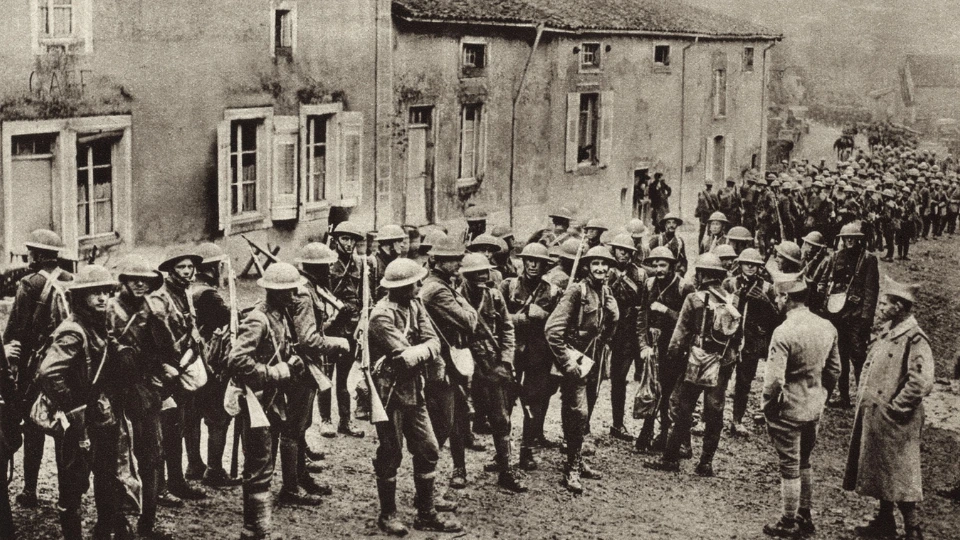
world war 1 soldiersA picture of World War I soldiers.

Luxurious hotels continued to develop rapidly during this decade. In Cannes, France, the Carlton Hotel (now the InterContinental Carlton Cannes) was built upon the collaboration between genius hotelier Henri Ruhl and architect Charles Dalmas. This luxury hotel opened for business in early 1911 and was quick to gain success.

However, World War I (1914–1918) impacted the growth of the hospitality industry, especially in warring countries. Revenues were declining due to bookings cancellations and pullouts of visitors, and many hotels had to convert some of their spaces into hospitals for war casualties, including the Carlton Hotel itself.

Hence, this decade became a challenging period for hotels to adapt to such difficult situations.

1921–1930

hotel in america, circa 1920sHotels in 1920s United States.

During this era, the United States alcohol prohibition laws of 1920–1933 impacted the country’s hospitality industry as well. Without revenue from beer and liquor sales, many hotels were forced to close or convert to other uses.

On the other hand, other hotels that had been established before this period tried to maintain their existence in the hospitality industry. As the 1921–1930 period was commonly known as the “Roaring Twenties” in the United States and was characterized by social liberation and cultural innovation, hotels then focused their businesses on entertainment and leisure. An example was the Waldorf-Astoria Hotel, which offered lavish amenities and services such as fine dining, ballrooms, and various top-notch entertainment.

Marriott International, one of the world’s most famous and largest hotel chains, was also established in this era. The company began as a root beer stand in 1927 and continued to grow until it opened its first hotel in 1957, which was the Twin Bridges Motor Hotel in Virginia.

1931–1940
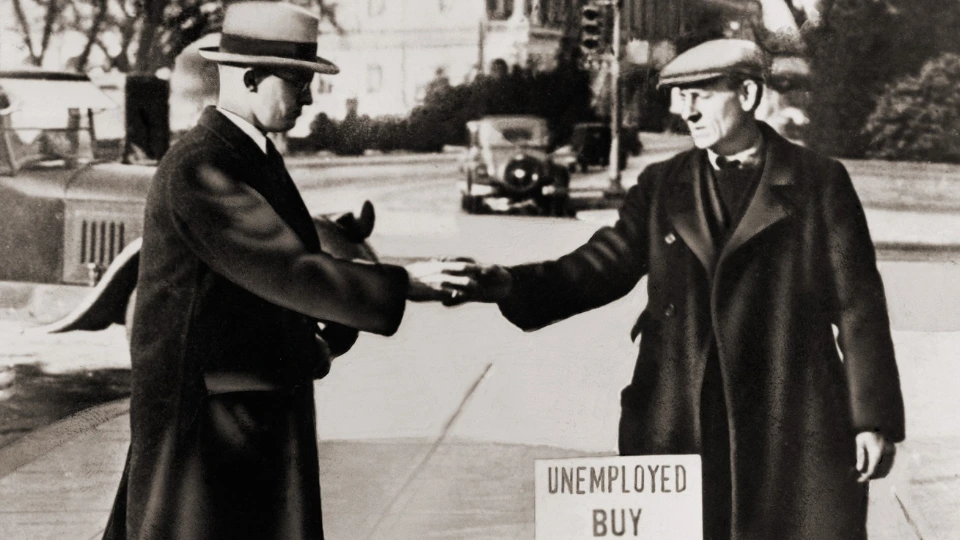
an unemployed man sells apple during the great depression in americaAn unemployed man selling apples during The Great Depression.

Plenty of tumultuous events took place throughout this period. The Great Depression, the worst economic downturn in industrial history, began in 1929 and lasted until the end of this era. It impacted various sectors, including the hospitality industry, leading to construction halts and falling room rates in many hotels.

As the Great Depression ended, World War II broke out at the end of this period (1939), which marked another new challenge for hotels to overcome. At that time, women became hotel “bell girls” since men went to war, and schools became training grounds to study hospitality services.

Around this period, technology like air conditioning was also introduced to hotels.

1941–1950

illustration of world war 2 1939-1945A painting portrayed World War II.

From 1939–1945, hotels fell from 25% to 20% of total establishments due to the impacts of World War II. During the war, many hotels and resorts were used by militaries as shelters and hospitals.

A few examples are the Hydro Majestic hotel in Australia, which became a field hospital for American soldiers in the South Pacific, and the Vinoy Renaissance in Florida, which was occupied by the military as a shelter. Both of these hotels were lent for military purposes around the year 1942.

The use of air travel as transportation was also increasing, resulting in an increase in travelers. Many hotels were then expanded to accommodate them.

After the war ended in 1945, the hospitality industry regained its strength and hotels added more innovations to their services, such as the Hoteltype machine established by the Westin in 1947.

1951–1960

airplane in 1950sAir travel in the 1950s.

Economic and travel activities during this period continued to grow. Along with the 1960s, this era was also considered the “Golden Age” of air travel. The increasing number of cars, which started in 1951, has also been a major factor in the rise of tourists’ visits to leisure facilities.

This resulted in hotel expansion and the creation of more hotels in popular tourism destinations, as several notable hotels and resorts, such as the iconic Sands Hotel & Casino in Las Vegas (1952) and the Hilton Hawaiian Village (1955), were built during this era.

Hotels also improved their amenities and services to efficiently accommodate guests’ needs. Modern hotels in this period offered full bathrooms, heating systems, quality furniture, and air conditioning. Hotel departments, such as F&B, were also improved in terms of services.

1961–1970
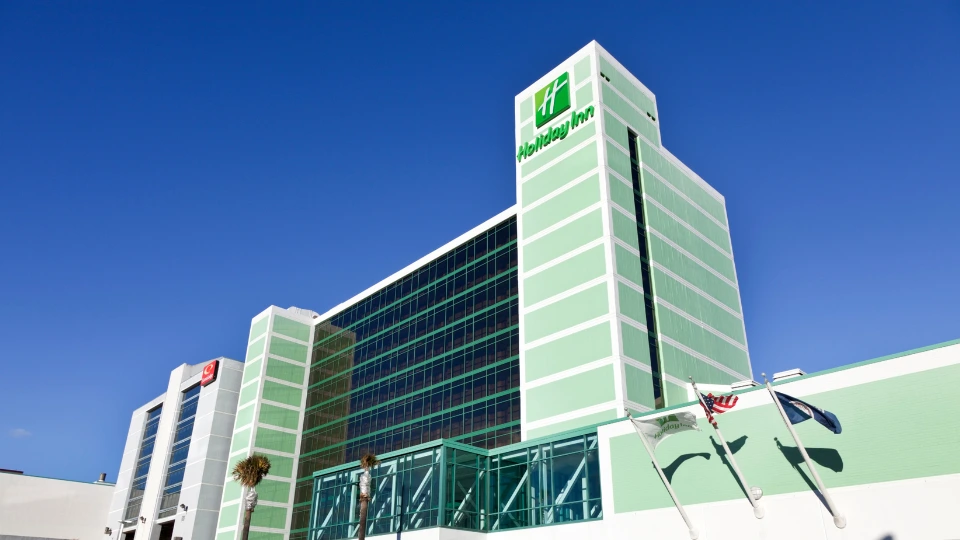
holiday innOne of Holiday Inn’s hotels, created by Kemmons Wilson.

Due to the popularity of air travel in this era, traveling activities increased, and hotels experienced significant growth in customers.

In the United States, the hotel chain by Kemmons Wilson and Atlanta-based Holiday Inn skyrocketed. By 1968, Kemmons Wilson had constructed more than 80 new Holiday Inns across the nation, totaling 40,000 rooms. This makes the 1960s a turning point for the hospitality industry in the United States.

Overall, this decade was a transformative era for hotels, marked by growth and plenty of innovations.

1971–1980

1973 oil crisis impactAn illustration of the 1973 oil crisis that impacted economic and hotels growth.

The 1973 oil crisis that happened in this era resulted in stagnant economic growth in many countries, which affected the hospitality and tourism industries as well.

As the oil price skyrocketed, reductions in travel occurred, especially in airline travel due to inflated ticket prices. This led to a decrease in revenue for hotels as guests refused to travel.

However, some hotels continue to grow; an example is the Eaton Chelsea hotel in Toronto, which expanded to 500 and 1,000-room properties. Four Seasons, a renowned luxury hotel and resort company, also entered the United States market in this decade (1976).

1981–1990

great barrier reef australiaThe Great Barrier Reef, initially the location of John Brewer Floating Hotel.

Luxury hotels continue to thrive in this decade. An innovation in luxury hotels was made when the world’s first luxury floating hotel, named the John Brewer Floating Hotel, opened in 1988. The hotel was a 5-story building with almost 200 rooms and was built in Singapore to be placed on the Great Barrier Reef of Australia. Unfortunately, a cyclone hit this hotel and made it a commercial flop within a year of its release. Later, financial issues led to the sale of this hotel to North Korea.

Hotels also started to get more advanced in terms of technology as the internet was introduced in the same era. Some hotels began to use credit cards for reservations and checkout, with the Westin as the pioneer.

The end of this era was also marked by significant geopolitical events, such as the fall of the Berlin Wall in 1989 and German reunification in 1990.

1991–2000

burj al arab or burj khalifa in dubaiBurj Al Arab, located in Dubai.

Plenty of iconic hotels were built in this period, such as Dubai’s Burj Al Arab (1994). The hotel has broken a number of impressive records, including being the tallest all-suite hotel in the world at 321 meters, which is 14 meters taller than the Eiffel Tower.

In the same year, Hyatt Hotels and Promus Hotel Corporation became the first among other hotels to launch their own websites, and these technological advancements further improved the growth of hotels, making their day-to-day operations seamless.

Despite the luxurious hotel growth and technological advancements, hotels also faced challenges during this period, especially those in East and Southeast Asia, due to the impact of the 1997 Asian Financial Crisis.

2001–Current

Up until now, hotels have encountered various obstacles in their development. In the year 2001, the 9/11 attacks happened in the United States, which resulted in a drop in occupancy rates at American hotels. Years later, hotels had to cut their operational costs due to the 2008 global recession that impacted many sectors as well.

covid-19 pandemic illustrationAn illustration of COVID-19, the most recent disease that affected the world.

The most recent challenge faced by hotels is the outbreak of COVID-19 in 2020. At that time, measures were taken to decrease the spread rate of the virus, such as lockdowns, social distancing, and travel restrictions, which were implemented in many countries. However, these actions resulted in the temporary closure of hotels around the world.

Fortunately, the pandemic phase of COVID-19 has been decreasing in most locations now. Travel restrictions in some countries have been lifted, and hotels are reopening for business.

The good news is that luxury hotels and technological advancements continue to grow throughout this period. Luxury hotels like the Marina Bay Sands (Singapore) and The Shard (London) were built during this period, and these hotels later became luxury symbols that attract high-end travelers. Technology, such as online travel agencies, was also launched in this era and has been used by many hotels to support their businesses.

Despite the obstacles, this era has become a transformative period for hotels to keep growing, innovating, and adapting to the dynamic hospitality industry.

Predictions of Hotel Trends in 2023

trends predictions 2023 for hotel and hospitality industryAn illustration for future trends in hotels.

Amidst the dynamic world of the hospitality industry, innovations and trends continue to shift in order to meet customers’ demands. This year, Preno has predicted trends of hotels in 2023 that will set to revolutionize travel and travelers:

  • AI and automation
  • Wellness tourism
  • Innovative amenities
  • Digital payment
  • Co-working spaces
  • Pop-up hotels
  • Loyalty programs for customers
  • Sustainability

The trends are constantly evolving, which means adapting to them is a must for every hotel to continue providing their customers with the best services!

Wrapping Up

Now that we have arrived at the end of our trip, we can safely say that the hotel industry has gone through a lot of changes and made a tremendous progress over the past century despite all the challenges. In addition, the future of the industry looks more promising than ever with all the new innovations and technologies being adopted by hotels.

Meanwhile, we can’t also deny the fact that there will always be challenges that need to be addressed by experts. Thus, hotels will always need more skilled professionals to help them overcome the existing challenges and prepare for  future ones, which creates more opportunities for valuable talents in this industry.

Speaking of talents, RMC Asia has been a part of the hospitality industry since 2014 and become the bridge between the most recognized hotel brands across Asia and future hoteliers. Our goal is to take away all the noise and the friction by connecting the hotels and resorts with young professionals through our internship and management training programs! Join our successful participants and embark on your hospitality career with us now.

Recommended: Housekeeping Things You Should Know (2023 Edition)

The 100-Year Timeline of Hotel History Read More »

housekeeping service department in hotel

Housekeeping Things You Should Know (2023 Edition)

The Housekeeping Department is a standard, crucial part of a hotel’s day-to-day operations. With such importance, this department is often regarded as the backbone of a hotel, as its role is directly related to guests’ satisfaction and greatly affects the hotel’s reputation. While many may think that the Housekeeping Department is merely a hotel cleaning service or room attendant, the fact is that their responsibilities encompass a lot more activities than that.

This article will shed light on the intricacies of the Housekeeping Department operations some of which you might be unaware such as its organizational structure, specific responsibilities, opportunities in the Hospitality industry, and more. If you are ready to delve into the world of hotel housekeeping, buckle up and let us guide you to the behind-the-scenes of the Housekeeping Department!

Housekeeping Department’s Structure

Along with the Food and Beverage Department, the Housekeeping Department tends to be the one with the largest workforce compared to other hotel departments; the bigger the hotel, the more manpower is needed, especially in the housekeeping area.

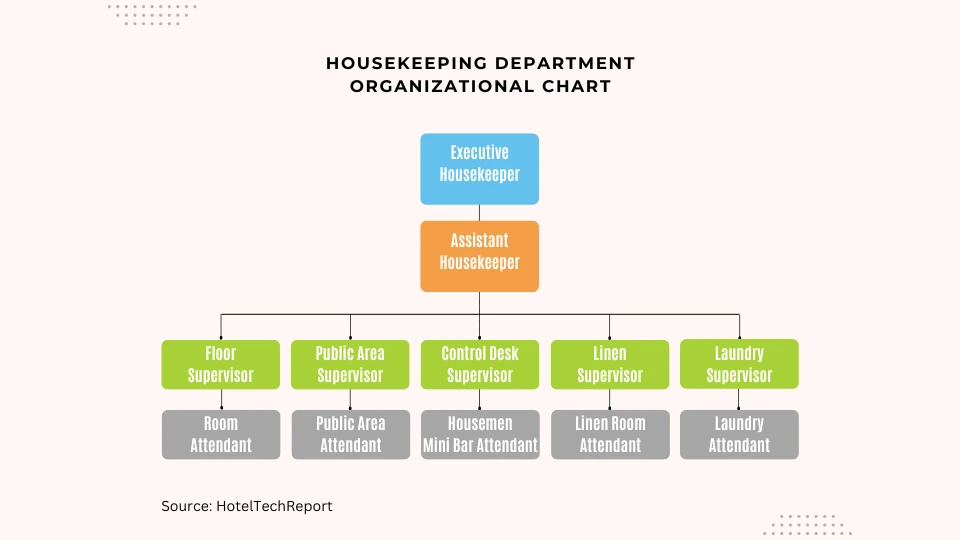
A proper and well-functioning Housekeeping Department has an organizational structure to accurately delegate duties and efficiently execute them. In some hotels, the structure is organized as the following:

hotel housekeeping department organization structureOrganizational Structure of the Housekeeping Department.

The above structure shows that the Housekeeping Department is composed of several positions that handle various areas of housekeeping operations, with the Executive Housekeeper as the head of the department. Each position has been assigned different responsibilities, all of which are equally essential in maintaining the quality of the hotel’s cleanliness and guests’ satisfaction.

Housekeeping’s Positions and Responsibilities


1. Executive Housekeeper

executive housekeeper in housekeeping hotelThe Executive Housekeeper.

As the key leader of the Housekeeping Department in a hotel, an Executive Housekeeper or Director of Housekeeping is in charge of the cleanliness and aesthetic maintenance of the entire hotel’s property.

In specific, the scope of their duties is as follows:

  • Organizing and overseeing all staff schedules and tasks on a daily basis;
  • Managing and maintaining housekeeping operating procedures, inventories, budgets, department activity and staff performance records, as well as guests’ feedback;
  • Working closely with fellow Housekeeping staff members and other departments,
  • Recruiting and providing training for new staff members.

The Executive Housekeeper usually reports to General Manager, Resident Manager, or other similar roles whose names may differ in some hotels. In their line of work, an Executive Housekeeper is typically assisted by an Assistant Housekeeper.

2. Assistant Housekeeper

assistant housekeeping in hotelThe Assistant Housekeeper.

An Assistant Housekeeper is another core member of the Housekeeping Department. As stated by Hilton Garden Inn, this role is responsible for assuming leadership of the department when the Executive Housekeeper is not present, while their full duties include:

  • Assisting the Executive Housekeeper in managing the Housekeeping staff, procedures, inventories, budgets, and reports as needed;
  • Helping in training and coaching for both new and existing staff members;
  • Collaborating with other Housekeeping staff and fellow hotel departments to ensure the guest’s satisfaction;
  • Responding to guests’ complaints or concerns in a professional manner.

As they are the Housekeeping Department’s second in command, the Assistant Housekeeper must be able to work efficiently and effectively to assist the leader, as well as provide professional housekeeping services for hotel guests.

3. Floor Supervisor & Room Attendant

floor supervisor and room attendant in housekeepingFloor Supervisor and Room Attendant.

As we look into the Housekeeping Department’s structure, we will get to know the role of the Floor Supervisor. They are in charge of maintaining the cleanliness of guest rooms and working areas, as well as supervising their team: Housekeeping Room Attendants.

The responsibilities of a Floor Supervisor’s tasks include:

  • Organizing daily allocation of guest rooms and other areas of the floor for cleaning services by team members;
  • Managing guest requests and room inspections to ensure that they meet hotel standards;
  • Assisting the Executive Housekeeper and Assistant Housekeeper in staff training, as well as working closely with other related Housekeeping positions and hotel departments.

Meanwhile, the duties of Room Attendants are as follows:

  • Maintaining the cleanliness of guest rooms, bathrooms, and other areas of the floor, which includes changing linens and towels, sweeping, vacuuming, and other cleaning services;
  • Responding to guests’ requests in a friendly and professional manner;
  • Following all housekeeping procedures in order to meet the standard of a clean hotel.

By order of hierarchy, the Room Attendant directly responds to the Floor Supervisor, while the latter reports to the Assistant Housekeeper.

4. Public Area Supervisor & Public Area Attendant

public area hotel workerPublic Area Attendant.

The next in line is the Public Area Supervisor. They are in charge of overseeing the performance of Public Area Attendants and ensuring the hotel’s public and functional areas stay clean.

Specifically, the scope of the Public Area Supervisor’s responsibilities includes:

  • Organizing cleaning services by staff members for all public areas; 
  • Maintaining safety and security systems in public areas by coordinating with the Security and Maintenance Department;
  • Training and briefing new staff members.

As for Public Area Attendants, their job description covers:

  • Cleaning the hotel’s public areas, such as hallways, lobbies, elevators, and more;
  • Maintaining housekeeping equipment and inventories;
  • Following all housekeeping procedures and the assigned cleaning schedule.

Similar to the Floor Supervisor and team, the Public Area Supervisor reports their work to the Assistant Housekeeper, with Public Area Attendants being directly responsible to the former.

5. Control Desk Supervisor, Housemen & Mini Bar Attendant

mini bar attendant in the guest roomMini Bar Attendant in the Guest Room.

The Control Desk Supervisor is the center of communication in the Housekeeping Department, as they are tasked with delivering and receiving information from the control desk. They are also the supervisor of Housemen and Mini Bar Attendants, with the summary of their full responsibilities is as follows:

  • Maintaining and handling up-to-date information regarding all Housekeeping staff, records of the Housekeeping Department’s daily operations, and guests’ requests or complaints; 
  • Assigning tasks for staff members according to the daily workload and preparing mini bar as well as other amenities list;
  • Coordinating with staff and related hotel departments, such as Maintenance Department for room maintenance issues or Front Office Department for room status matters.

Subsequently, Housemen and Mini Bar Attendants’ duties include:

  • Following assigned tasks and schedules from the Control Desk Supervisor, along with the standard operating procedures;
  • As for Housemen: cleaning the hotel’s furniture, rooms, and other areas;
  • As for Mini Bar Attendants: maintaining and tracking the stock of mini bar items, as well as attending to guests’ requests for mini bar service.

Although both Housemen and Mini Bar Attendants report to the Control Desk Supervisor, there are exceptions in some hotels, where the Mini Bar Attendant is directly reporting to either Executive Housekeeper or Assistant Housekeeper, just like the Control Desk Supervisor.

6. Linen Supervisor & Linen Room Attendant

linen attendant in hotel housekeepingA Linen Room Attendant.

As another important position in the Housekeeping Department, the Linen Supervisor role is in charge of all linens and uniforms in the hotel. With their subordinates of Linen Room Attendants, the area of the Linen Supervisor’s responsibilities include:

  • Supervising staff performance in the linen room’s daily operations, which involves maintaining the cleanliness of the linen area, as well as laundry supplies;
  • Ensuring that linens and uniforms are stored and ready for any events while following the proper procedure for issuing linens and uniforms to other Housekeeping members and hotel departments;
  • Working closely with staff members, the Laundry team, and other related hotel departments.

On the other hand, Linen Room Attendants’ duties consist of:

  • Sorting dirty linens and uniforms before sending them to the Laundry team;
  • Receiving, arranging, and issuing clean linens and uniforms to all employees;
  • Checking linens and uniforms conditions regularly, as well as ensuring that the items are properly stored and recorded.

On the basis of day-to-day operations, Linen Room Attendants are required to report to the Linen Supervisor, while the latter is directly responsible to the Assistant Housekeeper.

7. Laundry Supervisor & Laundry Attendant

laundry employee in hotel housekeepingA Laundry Attendant or Valet.

Last but not least, is the Laundry team which is led by a Laundry Supervisor. This position is the one responsible for running the hotel’s laundry operations while overseeing Laundry Room Attendants.

To summarize, the job descriptions of a Laundry Supervisor are as the following:

  • Preparing annual laundry budget, efficient laundry methods, as well as maintaining the washing quality of linens and uniforms;
  • Training Laundry Room Attendants and monitoring laundry costs;
  • Coordinating with staff members, the Linen team, and related hotel departments.

As for Laundry Attendants, the scope of their duties include:

  • Sorting, washing, drying, and folding linens, uniforms, and other textile-related items to maintain cleanliness;
  • Tracking laundering inventories and equipment;
  • Following the standard operating procedures for laundering linens and uniforms.

The Laundry team works very closely with the Linen team. Just like them, the Laundry Supervisor is responsible to the Assistant Housekeeper, while the Laundry Attendant or Valet is required to report their tasks to the Laundry Supervisor.

Codes in Housekeeping

One thing about the Housekeeping Department that differentiates it from other hotel departments is the use of unique codes during work. These codes are known as room status codes, which help Housekeeping employees operate smoothly.

Each code has a different meaning, with some examples shown below.

  • Occupied (the room has been assigned to the guest.)
  • Stayover (the guest extends their stay in the room.)
  • On-change (the guest has checked out, but the room has not been cleaned yet.)
  • Do Not Disturb / DND (the guest request to not be disturbed in their room.)
  • Sleep-out (the bed has not been used by the registered guest.)
  • Sleeper (the guest has settled their payment, but the room’s status has not been updated by the Front Office.)
  • Vacant & Ready (the room has been cleaned and is ready for use.)
  • Out Of Order / OOO (the room is under maintenance and isn’t available for guests.)
  • Late Check-out (the guest has been allowed to check-out of the room past the standard check-out time.)
  • Early Check-in (the guest has been allowed to check-in to the room earlier than the standard check-in time.)

Housekeeping’s Area of Responsibilities

Although Housekeeping is considered a back-of-the-house department due to their lack of direct contact with guests, they are also responsible for handling the hotel’s front-of-the-house areas, as shown below.

area of responsibilities of housekeeping department in hotelHousekeeping’s Area of Responsibilities.

From the guest room to the laundry room, all members of the Housekeeping Department work together to provide housekeeping services and ensure the hotel meets its cleanliness standards!

How to be a Housekeeping Employee

Housekeeping services in hotels have always been one of the very high-in-demand departments in the Hospitality industry, which is why many inevitably wish to work in this field of Hospitality. Becoming a Housekeeping employee in a hotel requires qualifications from the general to the specialized ones based on the position’s responsibilities, levels, and other aspects of the job.

If you are preparing for a career in the Housekeeping Department, you may want to check this out! Here are the general requirements to be a valuable Housekeeping employee, summarized for you!

  • Excellent knowledge and ability in housekeeping, such as laundering for the Laundry team.
  • Exceptional skills in time management, communication, and details.
  • Good physical stamina for going through hectic work shifts.
  • High school diploma or GED certificate.

Each position in the Housekeeping Department has other specific requirements for their employees, as well as higher positions in the department that require more advanced qualifications. Although climbing to the top level of the Housekeeping Department won’t be easy, there will always be options worth trying.

To give you a heads up, RMC Asia is offering opportunities for those passionate about Housekeeping and Hospitality industry with our internship programs!

As we have always been dedicated to providing quality internships, our participants will not only gain professional self-development, career enhancement, and connections with 5-star hotels–but also unforgettable cultural exchange experiences in our program destinations.

Join our successful participants and start your Hospitality career with us now!


Recommended: 5 High-Paying Hotel Jobs for Starters


Housekeeping Things You Should Know (2023 Edition) Read More »

high paying jobs in the Hospitality industry

5 High-Paying Hotel Jobs for Starters

The Hospitality industry has always been one of the most popular fields for job seekers. Various segments existed within this industry, such as back-of-house positions (namely Food and Beverage Department), customer service roles like Front Office Department, and others that offer high salaries and interesting benefits.

As EIU reports stated that global tourism arrivals will rise by 30% this year, there are more people who turn to this sector for high-paying jobs. With the Hospitality industry back in the game and businesses growing again, opportunities for well-paid jobs are now opening up for talented candidates!

Thus, this article will provide you insights into a few of the lucrative positions in the hotel, their responsibilities, required skills and qualifications for the positions, along with details on the salary. If you are ambitious about high-income positions in the Hospitality industry, you may want to read this one till the end!

High-Paying Hotel Jobs in 2023


1. Sommelier

a sommelier or a wine taster in the hotelA Sommelier.

While Sommeliers’ job scope is revolving around wine, they are not the same as Bartenders. A Sommelier’s main responsibility is managing the hotel’s wine program, which includes selecting, purchasing, listing, and tasting wines, along with educating and advising hotel guests on wine selections to pair well with their meals.

To become a Sommelier, one is required to possess the following skills and qualifications:

  • Excellent knowledge of fine wines and exceptional palate as a wine taster;
  • Strong customer service skills to educate and advise guests in an appropriate manner,
  • Certifications from the Court of Master Sommeliers or similar organizations.

Court of Master Sommeliers (CMS) is a renowned organization for wine service professionals which provides certification for Sommeliers. There are four levels of certification, with Level 1 Sommelier as the beginner level of certification.

According to SalaryExpert, the Sommelier’s salary differs in some of the tourists’ favorite destinations. In UAE, the average salary of a Sommelier with 1-3 years of experience is USD 24000 per year, which is considerably high in the country. Surely, the more experienced you are, the higher your salary is!

2. Massage Therapist

female massage therapist or masseuse in a hotelFemale Massage Therapist (Masseuse).

Fun fact: Massage Therapist is the general, more gender-neutral term for both Masseuse (female Massage Therapist) and Masseurs (male Massage Therapist). In a hotel, this role is responsible for providing various types of massage services to guests, such as sports or Swedish massage to help relieve stress and improve health.

There are key skills and qualifications required for the Massage Therapist position:

  • Completed certificate or diploma program from an accredited school and passed the examination to be a licensed Massage Therapist;
  • Knowledgeable in human anatomy and physiology, along with different types of massage techniques,
  • Good attention to detail, empathetic, and caring demeanor to guests.

A Massage Therapist should also excel in communication skills, as they must be able to listen to the guests’ needs or requests and provide them with a therapeutic and relaxing experience.

Massage Therapist is a job that offers opportunities for personal and professional growth, as well as monetary benefits. In Qatar, the average annual salary for a Junior Massage Therapist is considered high, as it reaches USD 14500. With the demand for this position itself growing, Massage Therapist is a rewarding career that is worth considering!

3. Pastry Chef

pastry chef who bake desserts for hotel guestsA Group of Hotel’s Pastry Chef.

As a part of the hotel’s Food and Beverage Department, the Pastry Chef’s duties include creating and preparing various desserts for the hotel guests. They are also tasked with planning seasonal menus to keep up with the latest trends, as well as ensuring the quality of desserts to always consistent.

Specifically, being a Pastry Chef requires these qualifications and expertise:

  • Culinary degree from culinary school, or equivalent experience;
  • Working experience in a pastry kitchen, which can be obtained through internships,
  • Strong knowledge of baking and pastry techniques, as well as the ability to use baking equipment well.

Similar to other roles in the Food and Beverage Department, Pastry Chef is a challenging position that combines the individual’s creativity and technical skills. With such exacting work environments, Pastry Chef is also considered one of the best-paid jobs in the Hospitality industry.

For example, in Vietnam, you can earn an average salary of USD 8600 per year as a Junior Pastry Chef (1-3 years of experience), which is deemed high for an entry-level position in the country. If you aim to climb the ladder to become a senior-level Pastry Chef, you can definitely earn a better income with higher experience!

4. Front Desk Associate

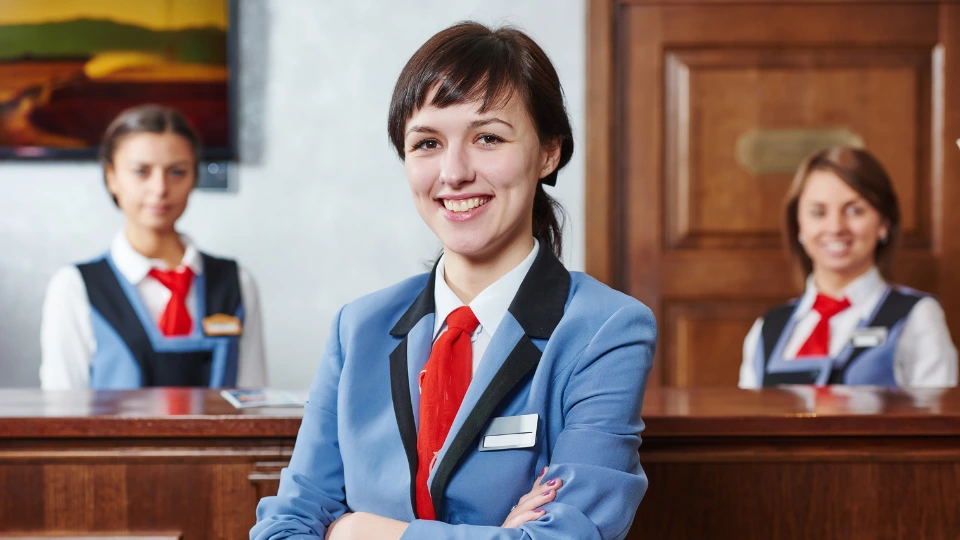
front desk associate of front office of a hotelFront Desk Associates.

Being the frontline of every hotel, the Front Desk Associate is a crucial position that specializes in assisting guests with their check-in and check-out processes. The Front Desk Associate job description also includes creating positive experiences for guests and ensuring that their stay is as comfortable and enjoyable as possible.

To pursue a career as a Front Desk Associate, the key skills and required qualifications for this position are as shown:

  • Outstanding communication, interpersonal, and organizational skills;
  • Proficiency in computer software, primarily in hotel management and database software,
  • Minimum high school or diploma degree (preferably in hospitality management). Otherwise, equivalent courses from recognized organizations as an alternative.

While many Front Desk Associates only require a high school diploma, the educational requirements may vary in other hotels. In addition, this role is also considered challenging, due to the fast-paced environment. Hence, a Front Desk Associate is expected to remain professional under stressful circumstances.

Front Desk Associate is among the popular jobs in the Hospitality industry! In some parts of Asia, you can earn a high base salary of around USD 6700 per year (in Thailand) to USD 8000 per year (in Malaysia) as an entry-level Front Desk Associate. Of course, as you level up to a higher position, the salary is expected to rise as well!

5. Hotel Concierge

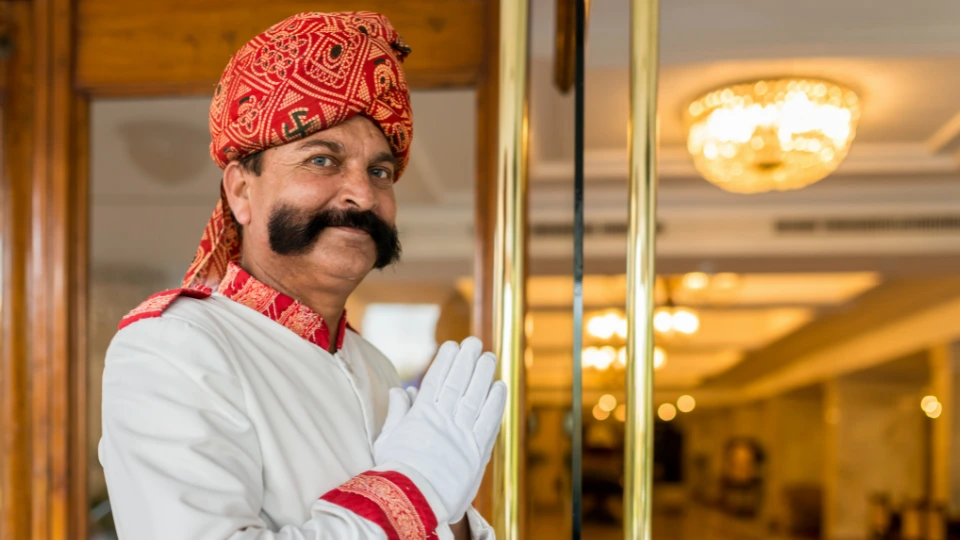
concierge in a hotelThe Hotel Concierge.

The Hotel Concierge, or simply “Concierge”, is a professional who is responsible for liaising hotel guests with various hotel services and facilities. Although a Concierge is primarily in charge of making sure that guests have a comfortable and enjoyable stay, their duties encompass a lot more such as providing guests with information, making recommendations, arranging transportation, booking reservations for events, and more.

As a Hotel Concierge, an individual is required to possess the following skills and qualifications:

  • Strong communication, customer service, and organizational skills;
  • Good knowledge of local attractions and events, along with proficiency in reservation systems software,
  • Minimum a high school diploma or equivalent, and previous experience in customer service area.

Since the Hotel Concierge role involves interactions with all guests on a regular basis, the ability to speak multiple languages is essential and even mandatory in some hotels. An ideal Hotel Concierge should also be able to maintain a professional demeanor, as well as work efficiently under pressure.

Working as a Hotel Concierge offers plenty of opportunities and benefits. If you choose to work in Middle East countries, you can earn around USD 13000 per year as a Junior Hotel Concierge in Qatar, while in UAE, the average gross salary is USD 27800 annually–both are considered high-paid in these two countries. However, keep in mind that the higher the job salary is, the harder it is to compete as a candidate!

Factors Contributing to High-Paying Hotel Jobs

hotel staff or employeesHotel Employees.

There are valid reasons why some jobs in hotels offer higher salaries. Here are a few factors that can help you negotiate with your future employers better:

1. Educational and Experience Levels

Educational background and job experience of an individual play a vital role in determining the salary of their positions in the hotel. Individuals with advanced degrees and more experience years are often considered to be more capable in work, so they typically receive greater salary numbers for their expertise and qualifications.

2. Market Demand for the Job

The second factor is the market demand for the job. If a particular position in the Hospitality industry is in high demand, one of the strategies deployed by employers is setting high salaries to attract top candidates. However, if the market demand for a particular position is low, the amount of the salary is low as well.

3. Responsibilities Level

Another factor that contributes to high salaries is the level of responsibilities in each job. Department leaders, general managers, and other positions with greater responsibilities are usually given high salaries, as their jobs require advanced levels of expertise, leadership, and decision-making.

Tips to Get High-Paying Hotel Jobs

a successful candidate after job interview with recruiterA Candidate Successfully Passed the Job Interview.
In order to impress the recruiter, there are several steps to land the high-paying job you should aim for:

1. Build a Strong Resume

Your resume is your first impression to the employer. As hotels want to find the right candidate, it’s important to demonstrate your relevant skills and experience that will show you as a top candidate.

2. Expand Your Network

Networking is one of the essential keys to obtaining jobs in the Hospitality industry. By maximizing online platforms such as LinkedIn, you can connect with many industry experts, as well as gain insights and opportunities from them.

3. Know the Hotel

It’s important to know about your potential workplace. Show the employer that you are knowledgeable about the hotel’s culture and standards before attending the job interview.

4. Prepare for Practical Assessments

Some hotels require practical assessments to test the candidate’s capabilities, such as skill tests or role-play simulations. Hence, make sure you have a good understanding of the job you are applying for and practice properly!

5. Do a Follow-up

After a job interview, you can send your thanks, show your interest, and reiterate your qualifications for the job. This tip will help you make a good impression on the recruiter and raise your chances of getting high-paying jobs!

Opportunities

As the Hospitality industry is constantly evolving, job opportunities in this field are becoming more accessible for those who aim to advance their careers. While high-paying hotel jobs are dynamic, competitive, and often require higher qualifications, they offer endless possibilities for professional growth. With training and experience, there’s always room for anyone to achieve a lucrative career in the Hospitality industry!

The good news is that RMC Asia is one of the few agencies that can help young talents secure an internship or management training in the Hospitality industry. These programs allow participants to experience hands-on work with industry professionals at prestigious hotels and resorts while immersing themselves in the culture of our programs’ destinations!

If you are interested, you may join us now and embark on an unforgettable journey to success!

Recommended: Food and Beverage Department: Responsibilities, Services, and Prospects

5 High-Paying Hotel Jobs for Starters Read More »

Food and Beverage Department

Food and Beverage Department: Responsibilities, Services, and Prospects

Being one of the most important departments in a hotel, the Food and Beverage Department holds a key role in the hotel’s day-to-day operations. Fundamentally, their duties involve the high-quality serving of meals and drinks, combined with excellent customer service to create an unforgettable dining experience for guests.

While those tasks might be the most commonly known by people, there is actually more about the Food and Beverage Department than meets the eye. If you are a hotel staff wanting to learn more about this department or a senior student looking for opportunities in this area, our article will provide you insights into the Food and Beverage Department in a hotel, including the members’ responsibilities, services, and job prospects.

Food and Beverage Department’s Structure

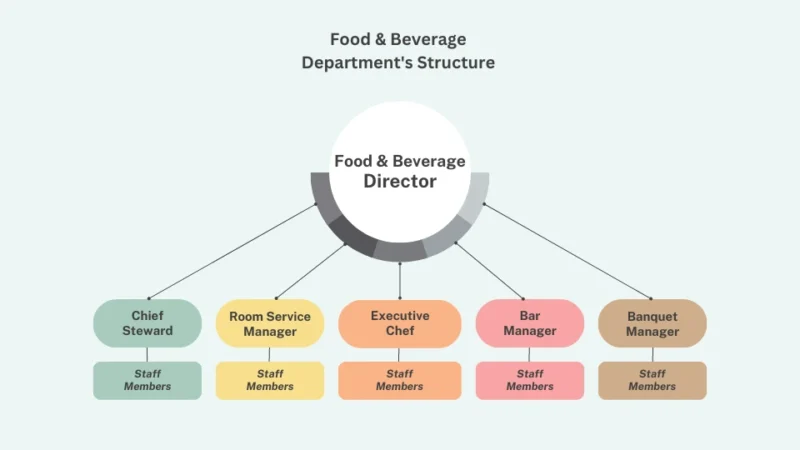
Before we go any further, see below for the organization chart of the Food and Beverage Department in a hotel.

Food and Beverage Department StructureThe Structure of Food and Beverage Department.

The Food and Beverage Department is composed of several sub-departments, which vary in each hotel. Based on this organizational chart, the department is led by the Food and Beverage Director who is in the highest position within the hierarchy of the Food and Beverage Department. The director supervises sub-departments which are led by managers that handle various areas of Food and Beverage. Each manager and their sub-departments have different tasks, but they share the same goal of ensuring the seamless operations of the hotel. Now, let us dive into the profiles and responsibilities of the Food and Beverage Department’s key players, shall we?

Food and Beverage Director

Food and Beverage DirectorThe Food and Beverage Director.

As the head of the Food and Beverage Department, a Food and Beverage Director shoulders great responsibilities, aside from mere supervision of subordinates and their sub-departments. In detail, their duties are as follows:

  • Planning and organizing the menu, costs, supply, as well as staffing;
  • Developing policies and procedures for the department’s operations and implementing them;
  • Collaborating with other hotel departments in ensuring seamless visits and dining experiences,
  • Keeping track of the industry’s latest trends and working closely with related sub-departments to innovate menu and service offerings.

The role of Food and Beverage Director is rather impressive and no easy feat. It requires exceptional leadership skills to manage the team and inspire them to achieve the department’s goals. If you want to reach this level of career, you will also need a strong knowledge of the Food and Beverage industry, along with excellent communication skills to maintain positive relationships with stakeholders.

Executive Chef

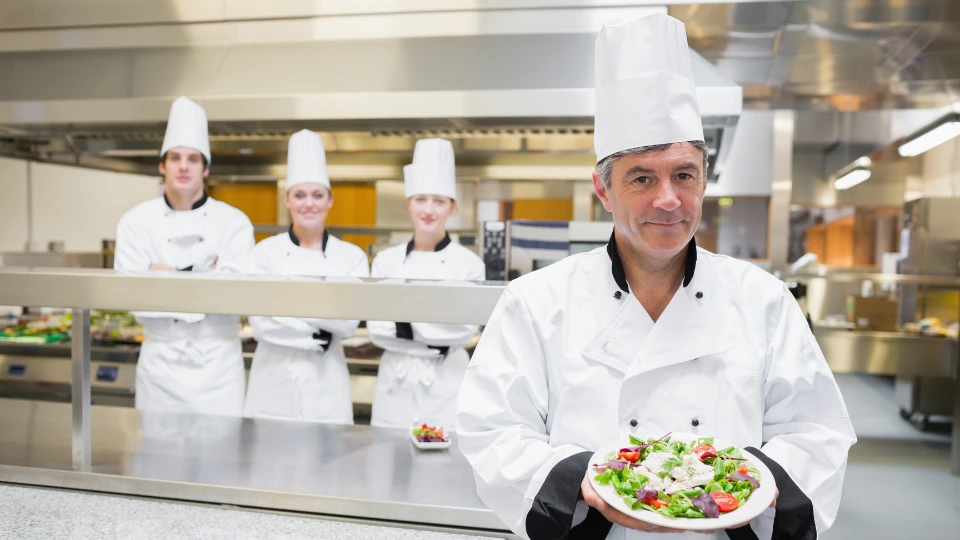
Executive Chef of a HotelExecutive Chef and Staff.

An Executive Chef’s duties are not limited to cooking, as they are in charge of the Restaurant and Kitchen sub-department. In some hotels, the restaurant and kitchen are differentiated, with the Kitchen sub-department may operate outside the Food and Beverage Department, and the Executive Chef directly reporting to the General Manager instead. As the team manager, their responsibilities are crucial to the uninterrupted flow of the hotel restaurant’s operations. To be specific, the job description of an Executive Chef includes:

  • Managing the restaurant and kitchen staff, as well as providing tools and resources to support their work;
  • Preparing and presenting high-quality culinary for guests;
  • Ensuring the final quality of the served meals, which include the taste, presentation, and temperature,
  • Collaborating with the Food and Beverage Director in menu innovations and developments.

Similar to Food and Beverage Director, being an Executive Chef means that they should possess great leadership skills to effectively manage the Restaurant and Kitchen sub-department. An outstanding Executive Chef must have a strong culinary background, with knowledge of various cooking techniques and ingredients. Surely, a good understanding of food and labor costs is also needed to improve the Restaurant and Kitchen team!

Room Service Manager

Room Service ManagerRoom Service Manager and Staff.

Have you ever ordered meals or drinks to your room during your hotel stays? If yes, you should already be familiar with the people behind this hotel service: the Room Service sub-department! This team is headed by a Room Service Manager, whose primary role is to manage and provide food and beverage service to guests in their respective rooms. Particularly, their duties consist of:

  • Overseeing all orders to ensure they are accurate and delivered to the correct rooms;
  • Managing the Room Service staff by providing training to serve the guests very well;
  • Planning, developing, and executing the regulations and procedures of Room Service operations,
  • Working closely with the Executive Chef and the Restaurant & Kitchen sub-department to secure the food’s quality and delivery orders.

A Room Service Manager should be customer-oriented, as they are also required to handle guests’ complaints and concerns professionally. In addition, detail-oriented, strong quality control, and time management skills are essential to a Room Service Manager’s expertise, so they will be able to manage their responsibilities effectively.

Chief Steward

a Chief StewardThe Chief Steward.

If you look for the term “steward” on the internet, you might find misconceptions such as the role is said to be the same as a waiter. The truth is, stewards and waiters don’t share the same responsibilities – let alone the sub-department! While waiters are actually the staff of the Restaurant and Kitchen sub-department, stewards are part of the Steward sub-department, led by a Chief Steward. Similar to other sub-departments, the Chief Steward is in charge of overseeing the team’s operations. Specifically, their responsibilities are much more than that, as they cover:

  • Maintenance of all cutleries, kitchen, dining areas, and other facilities so they meet the health and safety standards;
  • Training Steward staff in performing their tasks;
  • Developing, as well as establishing the cleaning and maintenance regulations and procedures,
  • Collaborating with the staff and the Food and Beverage Director in providing memorable, satisfying dining experiences to guests.

With such important duties, the Chief Steward is another key role in the Food and Beverage Department. To become a handy and exceptional Chief Steward, one must hold high levels of leadership, organizational, and attention to detail skills. For these skills to develop, you can challenge yourself by participating in volunteer, or even internship programs that will provide you with professional self-development!

Bar Manager

Bar ManagerThe Bar Manager.

The bar is a common Food and Beverage service in large-sized hotels and is popular among the guests. A bar provides various types of drinks (often alcoholic beverages) which are served by a bartender. The Bar sub-department is managed by a Bar Manager, the person in charge of all the bar’s operations. As the team leader, their responsibilities are:

  • Managing the bar’s daily operations, which include organizing supplies, budget, and more;
  • Sourcing and training bar staff;
  • Developing and implementing bar regulations and procedures to maintain high-quality serving of drinks and exceptional bar service for guests,
  • Working with the head bartender in the creation and innovation of drink recipes.

Being the leader of the Bar sub-department means a Bar Manager should possess a high qualification, primarily in leadership and customer service. Additionally, a grasp of finances is needed as well for Bar Managers to successfully manage budgets and make monetary decisions.

Banquet Manager

Banquet ManagerThe Banquet Manager.

Hotels are often utilized as a venue for grand celebrations; for example, a company gala, weddings, or fancy dinner parties. As these kinds of events require special arrangements, there are people tasked to plan, prepare, and execute such occasions. They are the Banquet sub-department, with a Banquet Manager in charge of leading this sub-department. Specifically, the manager’s duties include:

  • Coordinating with clients to execute the special events properly and supervising the special events to make sure they run seamlessly;
  • Recruiting and training the banquet staff to perform excellent service for guests;
  • Developing and implementing policies and procedures for the Banquet sub-department’s operations;
  • Ensuring the facilities and equipment for special events are well-maintained and good to use.

The Banquet Manager is required to excel in the following expertise: organization, communication, leadership, and decision-making. To train and develop these skills, you will need experience and practice, which you can get directly by joining an internship program.

Staff Members

Food and Beverage staffFood and Beverage Department’s Staff.

Last but not least, the staff of each sub-departments that completes the Food and Beverage Department! These staffs are the hands and frontlines of Food and Beverage’s sub-departments, as some of them are required to serve the guests directly. In general, their responsibilities are as follows:

  • Work according to their job descriptions and answer to their supervisors;
  • Enforcing the regulations and following the procedures of their respective sub-departments,
  • Ensuring guests’ satisfaction by providing quality service in their respective fields.

The staff’s contributions are equally vital in supporting the Food and Beverage Department’s daily operations. Hence, it is mandatory for all department members to contribute to their fullest and maintain teamwork.

Types of Food and Beverage Services

types of Food and Beverage serviceFood and Beverage Services.

The Food and Beverage Department has a wide range of service offerings for guests. Here are some of the common Food and Beverage services provided in a hotel:

  • Restaurant Service: Provides a sit-down dining experience with various cuisine and menu options. Guests’ orders are taken and served by waiters.
  • Cafe Service: This service serves casual and light meals such as pastries and sandwiches for guests.
  • Room Service: With this service, guests are allowed to order food and beverages to their rooms. Hotel room service mostly operates 24 hours a day.
  • Banquet Service: The banquet service includes providing a large amount of food and beverage for special occasions, such as weddings and parties.
  • Bar Service: The service of drinks, often alcoholic beverages such as cocktails, beer, and wine. The drinks are prepared by bartenders according to guests’ requests.
  • Buffet Service: The buffet service allows guests to experience a self-serve dining experience. Guests can pick a variety of food from a buffet setup and enjoy it in the designated area.
  • Fine Dining Service: This service is ideal for events with important guests, as it offers a high-end dining experience with attentive service, exquisite food presentation, and also a wine list.

Food and Beverage Employment Prospects

Positions in Food and Beverage Department are one of the most job vacancies available in the Hospitality industry! If you are interested to work in Food and Beverage Department – and aiming for its top positions, the best route is to start from the bottom. For those who already have adequate experience in Food and Beverage, intermediate-level jobs would be ideal, while internship programs are a great starting point to pursue a career in this area.

RMC Asia offers internship and training opportunities in the Hospitality industry, with Food and Beverage as one of its focus areas. Our participants will gain professional development, hands-on work experience, and cultural exposure from our partners’ and programs’ destinations!

Join us and be a part of an unforgettable culture exchange and exceptional working experiences here!

Recommended: 7 Main Departments in a Hotel (Functions and Responsibilities)

Food and Beverage Department: Responsibilities, Services, and Prospects Read More »

hotel departments staff

7 Main Departments in a Hotel (Functions and Responsibilities)

As one of the fundamental pillars of economic growth in the world, Hospitality and Tourism have grown into a multi-billion industry for quite some time. Amidst its rapid development, hotels and resorts have constantly been one of the main forces that drive this industry forward.
Although hotels and resorts are already familiar to people, many are not aware of the names of their departments, let alone intricacies of their day-to-day operations . With this article, we will get to know more about how hotel departments operate; learn about their functions as well as responsibilities, and how much of importance they hold to the hotel’s integrity.
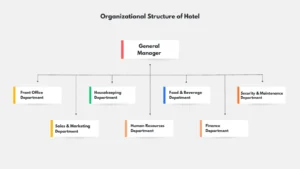
Before proceeding, let’s take a look at the departments that made up a hotel’s structure:

hotel structureOrganizational Structure of Hotel.

Like a giant tree with both exposed and hidden roots, some hotel departments’ duties required them to deal directly with customers, the example being Front Office Department. The others work behind the scenes, such as Housekeeping Department. However, it doesn’t make back office departments less important and they all work simultaneously to support the hotel’s operations and provide optimal services for guests.
The bigger and fancier a hotel is, the larger departments and more staff it requires to operate. However, there are 7 main departments that are crucial to the day-to-day operations of a hotel. Hence, let’s take a detailed look into the functions and responsibilities of these hotel departments!

Front Office Department

Front Office Department staffFront Office Department.

As the frontline of every hotel, the Front Office is very crucial. As Kainthola points out in his Principles of Hotel Management, this department has the task of image-building, which means they are the guests’ first and last point of contact.
In a hotel’s daily operation, the Front Office’s responsibilities include:

  • Guests’ check-in and check-out process;
  • Room reservation, registration, and assigning it to the guest;
  • Guest or customer service,
  • Settlement of bills.

To become a good Front Office staff, one has to possess several qualifications. Among the most important skills needed in this area is customer service, as guests tend to approach the Front Office for help, complaint, or to find and pass information. The Front Office should also maintain a clean appearance, physical fitness, and proper etiquette as the role deals directly with customers. Surely, experience is always an added advantage among a Front Office staff’s repertoire of skills.
If you’re interested in pursuing a career in the Front Office department, the best option is to start with an internship program that not only guarantees hands-on experience, but provides you with the skillset and mindset to become a valuable asset to your future employer as well.

Housekeeping Department

Housekeeping DepartmentHousekeeping Department.

This department does most of the hard work behind the scenes. They are the ones who ensure that every guest is as comfortable as they should be.
The Housekeeping staff carries out a number of daily tasks that aren’t as simple as they seem. To be more specific, some of their major responsibilities are as follows:

  • Cleaning and making beds in the guest’s room;
  • Replacing dirty linens and towels, and restocking amenities for the guest,
  • Taking out the trash, room service trays, and performing recycling.

Housekeeping is also in charge of maintaining the cleanliness and appearance of the public and back areas of a hotel, the examples are hallways, elevators, and many more.
With such great responsibilities, Housekeeping is another critical department that supports the success of a hotel’s daily operations. Thus, Housekeeping staff must have essential traits, the first and foremost being organized and detail-oriented due to their main tasks in maintaining the cleanliness and appeal of the hotel’s rooms, areas, and facilities. Additionally, time management and diligence are other skills that one should have to be a good Housekeeping staff, along with adequate experience through internship or training!

Food and Beverage Department

Food and BeverageFood & Beverage Department.

The key function of the Food and Beverage department is to provide food and drinks service to customers. In this department, the staff is usually divided into the Kitchen and Service sub-departments.
In general, Food and Beverage department’s staff are assigned the following duties to support the hotel’s business operations:

  • Ensure that the guests received high-quality meals that meet the regulations;
  • Serve the best culinary and customer service;
  • Dining table arrangement and welcoming the guests,
  • Maintaining cleanliness of the dining room, kitchen, and cutleries.

In larger hotels, the Food and Beverage also provides an array of other services such as bar and pastry for its guests, which are performed by bartenders and pastry chefs.
Just like its other departments, the Food and Beverage has required a certain set of skills from its staff. To able to land a job in this field, an individual must be flexible and adapt to the fast-paced environment of the Food and Beverage department. If he/she aims to join the Kitchen sub-department, there would be more specific requirements, such as knowledge of cooking.
As the food and beverage industry has always been popular, hotel jobs for this expertise are available in various types, ranging from internships to full-time jobs. If you’re a student or graduate who wants to kickstart your career in this area, an internship or management training program would be a fit for your future!

Security and Maintenance Department

Security and Maintenance Department.

Similar to the Housekeeping department, most of the Security and Maintenance department jobs are done out of public view, but their contribution is as important as other departments for the hotel’s seamless operations on a daily basis.
As a part of a hotel’s grand structure, the Security and Maintenance department is responsible for the following aspects:

  • Enforcing protocols that should be followed by both employees and guests;
  • Traffic and access control; examples are controlling traffic flows in parking lots to avoid accidents and patrolling the hotel area to prevent intruders and other suspicious attempts;
  • Handling guests’ loss and prevention cases,
  • Install, manage, and repair the hotel’s system and facilities, such as electricity and internet system, water, furniture, and equipment.

Overall, the function of this department is to ensure the safety and comfort of everyone within the hotel area, and that the integrity of the hotel building and facility is continuously well-maintained.
A few of the skills required from a Security and Maintenance employee are excellent communication, organizational, and strong decision-making skills that would keep the Security and Maintenance department running as intended.

Human Resources Department

Human Resources Department staffHuman Resources Department.

Now that the hospitality industry is blooming again, hotels and resorts everywhere are opening up work opportunities for talented candidates. In order to find and recruit these desired talents, the Human Resources department is the one team who’s responsible for this area.
As they play a crucial role in ensuring the hotel’s future by recruiting talented staff regularly, which may also make Human Resources jobs more challenging at times. In detail, their responsibilities include:

  • Planning, preparing, and listing new human resources needs, organizational and department structure, working contract or agreement, and more;
  • Performing the recruitment process through job posting, application screening, and interviewing candidates;
  • Managing and maintaining external relations with related parties, such as local revenue service and labor departments,
  • Handling training and development, as well as retention of employees.

These great responsibilities of human resources make them key in the development of a hotel, thus affecting organizational success in the long run.
With a bright prospect, human resources management is among the favourite career choices for students and graduates. If you aim to start your journey here, a Human Resources internship is the perfect place to begin!

Sales and Marketing Department

Sales and Marketing DepartmentSales and Marketing Department.

In order for hotels to generate income and become profitable, sales and marketing are essential to reach the target audiences and persuade them into buying decisions. This is where the Sales and Marketing Department comes into the picture.
As the Sales and Marketing team is a crucial part of a hotel’s success, they are given responsibilities that include:

  • Planning long-term and short-term marketing strategies by researching the market trends;
  • Preparing and producing materials to promote the hotel, as well as executing promotional activities through social media and other channels;
  • Updating customer information in the hotel’s database,
  • Analyzing the performance of marketing campaigns and other statistical data.

Sales and marketing jobs are often challenging with targets to reach, but they held great importance to the success of a hotel’s business. Amidst this digital era, sales and marketing have been one of the most sought-out positions by every hotel. With so many branches in sales and marketing itself, this field promises job opportunities with exciting experience and benefits!

Finance Department

Finance Department expertSales and Marketing Department.

Last, but not least hotel department which is critical to the business is the Finance Department. This department serves a significant purpose in the entire financial activities of a hotel. Specifically, a finance department’s responsibilities are as follows:

  • Recording and reporting data of the hotel’s financial transactions, including revenue, profit, taxes, equity, and more;
  • Updating and reconciling internal financial data and bank statements;
  • Do budgeting, accounting, and preparing monthly to annual financial reports of the hotel,
  • Participating in hotel’s financial audits.

Generally, the Finance Department requires its ideal employees to possess high analytical, communication, and time management skills, along with broad knowledge of financial policies, procedures, and systems.
To be able to join the Finance Department in the hospitality industry, skillset and mindset alone don’t suffice as it requires some experience, to begin with! The good news, some hotels are currently opening up finance internship programs for students and graduates. If this sounds like a fit, come seize the opportunity now!

Which is the most important department?

Although each department has different functions and responsibilities, all share a common trait, which is to fully support day-to-day operations in the hotel. These departments are equal in position and importance within the hotel’s hierarchy.
As we came to know more about the hotel departments, we also learn to understand that the jobs in the hospitality industry are challenging yet rewarding!
If you are a student or fresh graduate who’s planning to take an internship or training and sharpen your skills in a real work environment, you have a perfect chance to join our Hospitality and Business Internship program. Our program offers services ranging from professional development and cultural exchange experience abroad to networking opportunities with industry experts!
Find more hospitality internship opportunities with various opening positions here.

7 Main Departments in a Hotel (Functions and Responsibilities) Read More »

Scroll to Top

This website uses cookies to ensure you get the best experience on our website. Learn more about our privacy policy.