

Alya Miranti Azzahra

Alya is currently on a mission with RMC Asia as a Content Marketing. Her mission includes writing captivating content for blog, LinkedIn, and social media audiences. She's also a freelance translator & proofreader and is continuing her study in Communication.

Fintech: The Brilliant Innovation for the Hospitality Industry

Fintech: The Brilliant Innovation for the Hospitality Industry

It’s not unusual that almost everything has been imbued with technology in this digitized era. This includes the finance sector, leading to the birth of the term “fintech”—a combination of financial and technology.

In the current hospitality industry, fintech plays an incredibly important role for many businesses. The innovation of fintech has transformed the industry, making it more advanced and benefiting both businesses and customers alike.

Our article today will take you to explore and understand ways fintech influences and transforms the hospitality industry, starting from its definition, crucial roles, to its advanced innovations that take the hospitality industry to a whole new level!

Understanding the Basics of Fintech

what is fintechUnderstanding fintech.

Let’s start with a simple question: What is fintech? Fintech (financial technology) is a term that encompasses technologies created to automate traditional financial systems for businesses and customers. Fintech includes a wide range of technologies, ranging from mobile apps for payments to complex blockchain networks.

So, how does fintech work? To simplify, fintech streamlines financial transactions for businesses and customers, making them more accessible and affordable. For instance, Venmo or Cash App—both examples of fintech products—allow users to send funds directly to their desired accounts at any time of the day, which is highly efficient.

Over the years, fintech has become a growing trend in various industries, including the hospitality industry. Many hospitality businesses have now integrated fintech into their day-to-day operations, resulting in a modernized hospitality industry. In the next section, we have compiled the roles that fintech plays in transforming the industry, which you can read about below!

How Fintech Transforms the Hospitality Industry

Fintech plays an important role for both customers and businesses in the hospitality industry! Here are a few ways how fintech becomes a difference-maker that transforms and takes the industry to a new level.

1. Fintech Modernizes Payment Methods

Payment MethodsFintech modernizes payment methods.

We might be stuck with hasslesome cash payments forever if fintech didn’t exist. Thanks to fintech, the payment process in the hospitality industry has become seamless, allowing customers to pay for their purchases easily using modern methods such as online payment channels in mobile apps. Less hassle, more frictionless travel!

2. Fintech Improves Customer Loyalty

happy customerFintech improves customer loyalty.

It takes a lot for a hospitality business to achieve customer loyalty, let alone retain them. Using fintech will help to gain and improve customer loyalty. One way that can be tried is implementing convertible loyalty points as a payment option; this is more likely to make customers return and repurchase businesses’ services due to their economic benefits!

3. Fintech Reduces Operational Costs

Fintech Reduces Operational CostsFintech reduces operational costs.

There are more operational costs that a hospitality business should pay every day. Adopting fintech software as a digital finance solution will reduce businesses’ operational costs and save more time, as it allows businesses to control payments better, secure payment flow, and even avoid fraud!

4. Fintech Attracts and Retains Employees

satisfied happy employeesFintech results in more engaged workforces.

Employees are the lifeblood of a hospitality business; making sure they are satisfied leads to better customer service and guest experience. The good thing is, fintech benefits can also be perceived by employees in this matter. For instance, the use of fintech software that gives employees instant access to their wages at the end of each shift will lead to a more engaged workforce, as well as great customer service and guest experience!

5. Fintech Manages Risks and Boosts Customer Confidence

fintech reduce risks and boost customer confidenceFintech manages risks and boosts customer confidence.

Furthermore, fintech does not exclusively cater to modernized payment preferences; the use of fintech is also able to manage risks and boost customer confidence in purchasing hospitality services. An example is the protection for flights, hotels, or car rentals purchases through policies like refunds for cancellations, which can be found in many hospitality booking apps!

On a scale of 1 to 10, how important do you think fintech’s role to the hospitality industry is? Well, it is safe to say that its existence is one that is paramount to the current hospitality industry. What we will see next is the essential implementation of fintech in the hospitality industry, all of which we have covered just for you!

Fintech Products in the Hospitality Industry

Did you know that some fintech products that we use are also common in the hospitality industry? If you’re interested, you might want to proceed below for some examples of fintech implementations in the hospitality industry.

1. Digital Wallet

Digital walletDigital wallet.

This fintech product securely stores payment information and passwords in the cloud system. It is a financial transaction application that can be accessed on any connected device, primarily mobile devices. With a digital wallet, you no longer need to carry your cards and cash around!

2. Conversational Commerce

conversational commerceConversational commerce.

Hospitality businesses can easily interact with their customers using conversational commerce! Conversational commerce enables customers to make reservations, receive personalized recommendations, request support services, and even purchase products through a payment link within the messaging apps used for conversational commerce platforms.

3. Buy Now, Pay Later (BNPL)

buy now pay laterBuy now, pay later.

Establishing BNPL as one of the alternative payment methods allows customers to set up a flexible and short-term financing plan. BNPL also makes it easier for hospitality businesses to upsell more expensive packages, as merchants will receive more money per customer with BNPL compared to other payment methods!

4. Open Banking

Open BankingOpen Banking.

Open Banking allows users to securely transfer money between accounts and authorize online payments directly from a banking app or website. Compared to regular transfers, transactions using Open Banking happen within seconds! This offers advantages to both hospitality businesses and customers, as transactions with Open Banking provide a much more seamless experience.

5. Hospitality Finance Software

Hospitality finance softwareHospitality finance software.

Hospitality finance software offers numerous benefits to hospitality businesses. A good hospitality finance software enables businesses to effectively manage their day-to-day finance and accounting functions, including budgeting, forecasting, financial reporting, and cash flow management. Some of the best hospitality finance software options this year include FreshBooks, NetSuite ERP, and more!

Wrapping Up

The combination of finance and technology has proven to be crucial and beneficial to the hospitality industry. Fintech caters to both hospitality customers and businesses, ensuring that every financial aspect between both parties runs seamlessly.

There are many fintech products that we use in our everyday lives that are also common in the current hospitality industry, ranging from digital wallets to hospitality finance software. These innovations are taking the hospitality industry to a whole new level, and it is important for businesses and customers to keep up with them!

If you want to stay ahead of the curve in this regard, we recommend you an exciting way to do it: by joining a hospitality finance internship! At RMC Asia, we offer a variety of internship opportunities beyond finance, thanks to our partnerships with prestigious hotels and resorts across Asia.

Our programs provide participants with the skills, knowledge, and practices they need to become valuable hospitality talents, while also immersing them in unique cultural exchange experiences taking place in Asia’s enticing destinations!

This is your call! Unlock your potential with our internship programs and join our successful participants here.

Recommended: Exploring the Realm of the Finance and Accounting Department in Hotels

Fintech: The Brilliant Innovation for the Hospitality Industry Read More »

Exploring the Realm of the Finance and Accounting Department in Hotels

Exploring the Realm of the Finance and Accounting Department in Hotels

What comes to mind when you hear about finance and accounting? Most people would answer with ‘money’ or anything related to it. Although not entirely wrong, there are deeper aspects to the finance and accounting field than just monetary matters, especially in the hospitality industry.

In hotels, finance and accounting is one of the core departments with the main task of recording and maintaining financial records and monitoring the performance of the hotel’s business. Without this department, it would be difficult for a hotel to achieve sustainable, let alone successful, business.

Today’s blog article will take you to explore the realm of the finance and accounting department in hotels, starting from its importance and roles, to promising career paths in the field, and recommended financial and accounting software for you to learn!

The Functions of Finance and Accounting Department in Hotels

As stated earlier, the finance and accounting department in hotels is responsible for handling financial records and monitoring the hotel’s financial performance. This function is further specified into five different functions, all of which will be detailed below!

1. Financial Accounting

financial accountingFinancial accounting.

The first function of the hotel’s finance and accounting department is financial accounting! It involves recording and reporting financial transactions such as revenue, expenses, and profit. Such data is necessary for decision-making and maintaining the operational state of the hotel!

2. Cost Accounting

cost accountingCost accounting.

We know just how important it is for any business, including hotels, to know its expenses. Hence, the finance and accounting department performs the cost accounting function to record and report those expenses. This helps in understanding what has been purchased, who purchased it, and why it was purchased.

3. Tax Accounting

tax accountingTax accounting.

As a business, it is mandatory for a hotel to fulfill its tax obligations. The finance and accounting department has a tax accounting function, which includes recording taxes and filing tax payments to the authorities.

4. Auditing

auditingAuditing.

Financial records and procedures in a hotel must be verified to avoid unusual activities or discrepancies. The function of the finance and accounting department that handles this matter is called auditing, which must be performed carefully and thoroughly!

5. Managerial Accounting

managerial accountingManagerial accounting.

Last but not least, the function of managerial accounting allows the finance and accounting department to make important financial management decisions for the hotel, ensuring that the business operations run seamlessly.

Now that we have learned about the five functions of the finance and accounting department in hotels, the next question is: who are the individuals specifically responsible for performing those functions? Well, you just need to scroll down to find the job positions in the finance and accounting department in hotels!

Finance and Accounting Jobs in Hotels

The importance of the finance and accounting department results in its job positions being regarded as strategic and promising, drawing many hospitality job seekers to pursue careers there. If you are one of those interested in working in this area, check out some of the finance and accounting jobs in hotels that we have listed below!

1. Director of Finance and Accounting

finance directorDirector of finance and accounting.

As the top level of a hotel’s finance and accounting department hierarchy, the director of finance and accounting is responsible for overseeing the entire department and ensuring that every staff member performs their tasks correctly. In hotels, a director of finance and accounting usually reports to the general manager.

2. Purchasing Manager

purchasing managerPurchasing manager.

A purchasing manager works closely with external suppliers. Some of their tasks involve sourcing and purchasing new goods for the hotel, verifying the goods are of high quality, negotiating partnership deals with brands, and ensuring contracts between the hotel and external suppliers.

3. Cost Controller

cost controllerCost controller.

Just like its name, a cost controller’s task is to control the hotel’s cost. Specifically, they ensure the cost of purchased goods is correct, as per the contract and on par with market prices. Most cost controllers in hotels are mainly responsible for food and beverage supply costs, and they work closely with the purchasing manager.

4. Finance Controller

finance controllerFinance controller.

Meanwhile, the finance controller controls the day-to-day operations of the hotel’s finance and accounting department. Some of the tasks involve preparing and managing the hotel’s financial budget, ensuring the hotel is in compliance with local tax laws, as well as tracking the hotel’s fixed assets.

5. Payroll

payroll managerPayroll.

Payday must be one of every hotel staff’s favorite days! However, did you know what position is responsible for the payment of salaries and wages to hotel employees? The role belongs to payroll! Aside from that, payroll is also tasked with putting together individual payslips, calculating their taxes, and establishing the final payment amount.

6. Accounts Payable

accounts payableAccounts payable.

An accounts payable’s job can be said to be a straightforward one; they pay hotel invoices due to other companies, such as but not limited to goods suppliers, service providers, or bills and taxes issued by the government.

7. Accounts Receivable

accounts receivableAccounts receivable.

The opposite of accounts payable is accounts receivable! Instead of paying the hotel’s invoices, this position’s main duty is to send invoices from the hotel to other companies and ensure they are paid accordingly.

Every finance and accounting job requires a sense of responsibility as well as great capability. That’s why it is important to continuously seek new knowledge or skills in this area. For instance, you can improve yourself by mastering the financial and accounting software used in hotels, which you can read about in the next section!

Hotel Finance and Accounting Software to Learn

finance accounting softwareHotel finance and accounting software to learn.


Working in a hotel’s finance and accounting department involves the use of software technology too! As such, mastering one or more software would be an advantage that adds to your overall capabilities. Up next, we have compiled a few hotel finance and accounting software for you to learn!

  • M3: Ranked first in the 2023 HotelTechAwards for Finance & Accounting Software category, M3 provides lots of features ranging from forecasting, budgeting, and even business intelligence.
  • PVNG by Aptech: This software can handle both single and multi-property accounting easily! PVNG also has a simple menu structure which makes it suitable for learning.
  • Inn-Flow: Inn-Flow is a complete back-office management system that is able to handle various functions such as the hotel’s accounting, labor management, procurement, and sales.
  • IDeaS RevPlan: As a revenue forecasting and budgeting tool, this software helps hotels enhance productivity, increase profitability, and make smarter operational forecasts!
  • Omniboost: Renowned for its all-in-one feature, Nimble Property streamlines the hotel’s financial accounting and minimizes the bookkeeping process for finance and accounting staff members!

Wrapping Up

The finance and accounting department deals with the monetary aspect of hotel operations, making its existence crucial. Such a significant role also makes finance and accounting deemed as a complex field with greater work responsibilities compared to other hotel departments. Even so, jobs in this area have always been popular career routes in the hospitality industry, with opportunities scattered widely!

If you are looking for a way to set sail on your finance and accounting career in the hospitality industry, there’s no need to look further because you can find it easily with us at RMC Asia! We are the provider of Cultural Exchange Programs in Asia, a combination of hands-on hospitality internships and cultural exchange experiences located in various enticing destinations across Asia.

Our programs give participants the knowledge and skill sets to become capable hospitality workers through internship placements in prestigious hotels and resorts across Asia. More than that, the cultural exchanges that participants will experience in the country of placement will surely help them become valuable hospitality assets in the future!

Your success starts now! Find your dream hospitality internship and join our outstanding participants here.

Recommended: Open Doors to Opportunities with Hospitality Certifications

Exploring the Realm of the Finance and Accounting Department in Hotels Read More »

Open Doors to Opportunities with Hospitality Certifications

Open Doors to Opportunities with Hospitality Certifications

When it comes to achieving an outstanding hospitality career, many may still think that the key to obtaining it is through education and experience alone. What others might also miss out on is that there is another way to increase the success rate of your hospitality career: by acquiring hospitality certifications.

This doesn’t mean you can earn instant success with just hospitality certifications under your belt, though! Hospitality certifications act as complementary credentials that certify you are a professional and have demonstrated skills, abilities, and knowledge in a specific hospitality area. In other words, this thing is a ticket to prove your capabilities and boost your career.

Our article today will talk about hospitality certifications in detail, from what they are to where you can attain them, as well as the types of hospitality certifications that you can pursue for a brighter career in the hospitality industry!

The 5W Questions of Hospitality Certifications

Acquiring a hospitality certification helps hospitality workers further their potential and access more opportunities. However, some of us might still be unfamiliar with the importance of hospitality certifications. That’s why we are going to use the 5W formula to divulge the details of hospitality certifications, which you can read more about below!

1. What is a Hospitality Certification?

hospitality certificationIllustration of hospitality certification.

By its definition, a hospitality certification is a professional credential that certifies an individual has demonstrated excellent skills, knowledge, and capabilities in a hospitality area. It also serves as a symbol of accomplishment in the hospitality industry for all career levels!

2. Why Hospitality Certifications are Important?

employee achievementA successful hotel employee gets a promotion.

The job competition in the hospitality industry has always been tough, but there is no need to worry if you have a hospitality certification. Taking hospitality certifications not only improves your overall capabilities; they are also a beneficial addition to your professional profile, making you stand out to employers and opening up more opportunities!

3. Who Needs Hospitality Certifications?

new employee hiredA hotel’s new employee.

Whether you are a first starter or have already begun your journey in the dynamic hospitality industry, hospitality certifications are for everyone from different career levels, as well as for anyone who wishes to advance to a higher level.

4. When to Get a Hospitality Certification?

studyPreparation before taking a hospitality certification.

Any time is a good time to attain or add more hospitality certifications to your credentials! However, do keep in mind that you should be well-prepared before taking a hospitality certification!

5. Where to Acquire Hospitality Certifications?

online certificationFinding hospitality certifications online.

Depending on your area of expertise, you can earn a hospitality certification from a hospitality association, organization, or academy that issues it. There are many available certifications that you can find online, and to make it easier for you, we have also prepared a list of some hospitality certifications to boost your career — all of which can be found in the next section!

10 Hospitality Certifications to Advance Your Career (and Where to Get Them)

Are you ready to take your hospitality certification? Well, you don’t need to rush if this is your first time! There are lots of hospitality certifications that lead to promising career upgrades, and it will be up to you to choose which one is in line with your passion or expertise in this industry. Let’s get to know some of them first through our list of hospitality certifications below!

1. Certified Hospitality Digital Marketer (CHDM)

Administered by Hospitality Sales and Marketing Association International (HSMAI)

digital marketing certificationA digital marketing team of a hotel.

If you are about to begin or have started your career in a hotel’s sales and marketing team, the CHDM certification is highly recommended for you. It will surely make you stand out as a hospitality professional!

2. Certified Rooms Division Executive (CRDE)

Administered by American Hotel & Lodging Educational Institute (AHLEI)

certified rooms division executive crdeA rooms division staff of a hotel.

Does your expertise lie in the rooms division area? Hop up and apply for the CRDE license! It is available for rooms division staff at every level, including but not limited to front desk, bell, and reservation specialists.

3. Certified Professional in Catering and Events (CPCE)

Administered by National Association of Catering and Events (NACE)

certified catering hotelCatering in a hotel.

The CPCE is awarded to qualified caterers who have established a standard of excellence in the hospitality industry. Earning this certification would undoubtedly lay a strong foundation for your career in the catering and events field!

4. Certified Special Events Professional (CSEP)

Administered by International Live Events Association (ILEA)

certified eventEvents staff preparing a banquet at a hotel.

This hospitality certification has been established since 1993! The CSEP is granted to event professionals who have demonstrated skills, knowledge, and the ability to organize special events. If your hospitality study or occupation is focused in the events area, this one’s for you!

5. Certified Culinarian (CC)

Administered by American Culinary Federation (ACF)

certified culinary chef certificationCertified culinarian, one of the entry-level certifications for hospitality workers in the culinary arts field.

Hospitality certifications are not only for experienced individuals; first-starters can also obtain one too! One of the entry-level certifications is the CC. It can be earned by individuals with a certain level of education and experience in culinary arts, making them super rookies!

6. Certified Customer Service Specialist (CSS)

Administered by ETA International

customer service certificationFront office, one of hospitality roles that requires customer service skills.

The hospitality industry is a place where you will get to serve people from diverse walks of life, which is why customer service skill is required in every hospitality job. With the CSS, your customer service skills will be validated through employability concepts, eventually leading you to a higher level of career!

7. Certified Executive Housekeeper (CEH)

Administered by International Executive Housekeeping Association (IEHA)

housekeeping certification certified housekeeperHousekeeping staff in a hotel.

The job market for housekeeping is among the most competitive, which is why it’s important for those who wish to work in this hospitality field to stand out to recruiters. The CEH is a housekeeping certification you can pursue and leverage to improve your housekeeping career, as well as your salary prospects!

8. Certified Hospitality Technology Professional (CHTP)

Administered by Hospitality Financial and Technology Professionals (HFTP)

information technology certificationIT staff in a hotel.

Leap to the next level of your hospitality technology career by attaining the CHTP! This certification is specific to the hospitality industry, and an individual who obtains it is considered an expert, having successfully demonstrated skills, knowledge, and abilities in the hospitality technology field.

9. Certified Restaurant Server (CRS)

Administered by American Hotel & Lodging Educational Institute (AHLEI)

waitress certification server certificateRestaurant (F&B) servers in hotel.

Did you know that the restaurant server (also known as the F&B server) is currently among the most in-demand operational positions in the hospitality industry? Now that you know, it’s time to prepare yourself for the competition with the CRS. This certification will not only upgrade your capacity as an excellent server but also increase your chances of success!

10. Hospitality Human Resources (HHR)

Administered by The International School of Hospitality (TISOH)

human resources certificationIllustration of human resources field in the hospitality industry.


Hospitality workers are the greatest assets to every hospitality organization, which is why managing them is an essential task of the human resources department. With HHR certification, you will not only learn about human capital management, but you will also get to help grow employees’ potential and set the stage for success in your hospitality HR career!

Wrapping Up

Hospitality certifications surely are beneficial to hospitality workers! They are truly the medium for an individual to expand their capabilities as a hospitality professional, as well as proof of that prowess.

There are lots of certifications for specific hospitality fields, and adding one to your profile grants you higher professional points with employers. While there are many hospitality certifications, keep in mind to choose one that is aligned with your hospitality passion and expertise!

Of course, just a hospitality certification won’t be enough to gain success in the hospitality industry. Proper education and experience are always essential in this matter, and providing both has become our mission at RMC Asia since 2014!

Our cultural exchange programs are the solution we have come up with. They combine hands-on work training and cultural exchange experiences through hospitality internship placements in our Asia destinations. Not only do participants gain professional development, but they also get to discover their true potential in this unique abroad internship journey.

So, how do you feel about starting your own cultural exchange and internship adventure? Find the answer through our programs and join the success of our participants here!

Recommended: Elevating Careers with Hospitality Internship and Management Training!

Open Doors to Opportunities with Hospitality Certifications Read More »

Elevating Careers with Hospitality Internship and Management Training!

Elevating Careers with Hospitality Internship and Management Training!

Experience is one of the crucial aspects needed for those who just entered the workforce! This is why many companies offer internships and management training that provide real work experiences – and hotels and resorts in the hospitality industry are no exception.

To hospitality students and graduates, internships and management training are more than just stepping stones to gain skills, knowledge, and working experience; both are also beneficial ways to fast-track these talents’ careers in the hospitality industry!

Today’s digest will delve into the world of hospitality internships and management training; starting from the definitions, characteristics, benefits, successful tips to get hired in one, and even websites that you can surf to find suitable internship or management training opportunities for you!

About Internship and Management Training in the Hospitality Industry

hospitality management training hospitality internshipAbout hospitality internship and management training.

We’ve heard about internships and management training, but what do they mean in the hospitality industry? Let’s start with the basics: the definitions.

As derived from UMBC, an internship is a professional learning experience involving practical work that is related to a student’s field of study or career interest. It provides students with the opportunity to gain new skills and advance their careers.

Meanwhile, management training is defined as a designed work training program that prepares an individual to become a future leader or manager by focusing on improving one’s skills and knowledge in management, leadership, and business areas.

Hospitality internship and management trainingHospitality internship and management training differences.

In general, both internships and management training in the hospitality industry share a common ground: they are programs that offer participants a hands-on working experience in the hospitality field to gain professional and career development. However, there are also certain features that differentiate between the two programs, which you can learn more about below:

Characteristics of Hospitality Internship

  • Usually last from 4 to 12 months in duration;
  • Open to both hospitality students and fresh graduates;
  • Most hospitality internships may grant full-time employee benefits;
  • Participants may receive stipends, the amount depends on the employer;
  • There are available opportunities for participants to be recruited as full-time hotel/resort employees.

Characteristics of Hospitality Management Training

  • The duration can last from 6 to 24 months;
  • Only eligible for fresh graduates or degree holders;
  • Participants are usually entitled to full-time employee benefits;
  • Management trainees have a fixed salary, the amount of which depends on the employer;
  • After a specific period upon program completion, most management trainees are guaranteed a management position.

Aside from the differences, hospitality internships and management training have various benefits that one can harness to begin or advance their hospitality career. So, what are these benefits? Jump to the next section to see the details!

Benefits of Hospitality Internship and Management Training

internship benefitBenefits of hospitality internship and management training.

It’s obvious that hospitality internships and management training are popular due to their benefits, and this section is here to spill all the details! Here are some advantages of joining hospitality internships and management training for participants:

  • Enhancing skills: There are many skills that will benefit you as a hospitality worker, all of which you can gain and hone through a hospitality internship or management training!
  • Building connections: The hospitality industry is diverse, and being a part of it means you will get to meet people from various backgrounds and work or learn from them.
  • Improving CV or resume: Your CV or resume is one of the crucial aspects that recruiters look at. Listing your experience and contributions as a hospitality intern or trainee will surely make you appear more competent to recruiters.
  • Understanding job roles: Being a hospitality intern or trainee provides you with hands-on working experience in a real hotel or resort environment, which gives you a deeper understanding of your role.
  • Determining future careers: Sometimes, we might find ourselves unsure of which career path to choose. Joining a hospitality internship or management training program help you determine your future career, as both programs allow you to experience working in specific positions so that you can find out for yourself whether or not you are a fit!

One thing to keep in mind is that the competition to get hired as a hospitality intern or trainee is tough! That’s why getting yourself prepared is a must. What should you do, though? Well, you just have to scroll to the next line to see the successful tips to land a hospitality internship or management training!

Successful Tips to Land a Hospitality Internship or Management Training

While internships and management training are meant to train participants in a real work environment, it doesn’t mean the interview is a piece of cake – in fact, it can be challenging sometimes! Worry not, because we have already compiled some successful tips to obtain your hospitality internship or management training!

1. Hone Interpersonal Skills

interpersonal skills communicationHone your interpersonal skills.

The first and foremost step to take before applying to your targeted hospitality internship or management training is honing your interpersonal skills! This skill set is essential for working in the hospitality industry, where you will meet and interact with colleagues and customers of various types.

2. Learn Foreign Languages

learn foreign languageLearn foreign languages.

Hospitality is a field where people from different backgrounds gather. Hence, it is advised for you to learn as many foreign languages as possible. This helps strengthen your qualifications as an intern or trainee, as well as broaden your horizons and help you adapt to the international work environment of hotels and resorts!

3. Don’t Apply Randomly

apply jobsOnly apply to internship or management training that suits your qualifications.

Never apply to any internship or management training at random! Before you decide to apply, make sure that the internship or management training program matches your qualifications. Don’t forget to consider other aspects as well, such as the work location, program benefits, and the hiring process.

4. Research the Employer

employer research backgroundDo a research on your potential employer.

It’s important for you to do a thorough research about the hotel or resort you are applying to. Taking this step will help you to learn more about the nature of the employer, and also prepare you to respond seamlessly to company-related questions during the internship or management training interview.

5. It’s Practice Time!

mock interview practiceInterview practice with your friends or family.

Last but not least, practice before your actual internship or management training interview! Begin by listing potential interview questions and practicing your answers through mock interviews with friends or family members. You will find yourself more confident on your designated interview day!

Recommended Hospitality Job Boards

best hospitality job websiteRecommended hospitality job portals.

If you are still an enrolled student, you can easily find internship or management training opportunities in your campus career portal. Apart from that, you can also surf the internet and visit this list of hospitality job websites to find your dream internship or management training!

Wrapping Up

Internships and management training are ideal paths to take for anyone who aims to kickstart or enhance their hospitality career! Both programs are designed for the participants to learn new skills and knowledge through practical work in a real hotel or resort environment.

The fact that hospitality internships and management training offer a variety of benefits that one can harness makes the competition to land one of them tough. Hence, if you are planning to pursue a hospitality internship or management training program, do prepare yourself to increase your chance of getting hired!

Apart from trying successful tips, there is another worthy option you ought to try: entrusting your dream internship or management training with RMC Asia! Our professional team not only will help you with your resume, cover letter, or interview with hiring hotels and resorts – our support continues even until you are hired and finish your internship or management training period!

Moreover, our wide range of prestigious host organization partners across Asia will give you exceptional and unparalleled hospitality internship and management training experiences that prepare you to be a valuable asset in the hospitality industry.

Don’t wait; join our successful participants now!

Recommended: Cooking Up Success with Culinary Arts Education!

Elevating Careers with Hospitality Internship and Management Training! Read More »

Cooking Up Success with Culinary Arts Education! culinary schools

Cooking Up Success with Culinary Arts Education!

The tasty world of culinary arts is an eye candy of the hospitality industry that never fails to draw customers’ attention! However, it’s not just customers who find culinary arts fascinating; it is also a subject of interest to those who aim to be hospitality workers. As such, culinary education serves as a means for people to gain culinary skills and knowledge before entering the industry.

There are hundreds of culinary schools around the globe, all offering a range of diploma, bachelor, and even master’s programs that encompass much more than just learning to cook food. Many culinary schools now provide various culinary arts studies that allow students to innovate and expand their career choices!

Today’s edition of our article will guide you to learn more about culinary arts education, including its brief history, choice of majors, best schools, and promising job opportunities in the field. Let’s begin our journey by scrolling down to the next section below!

About Culinary Arts Studies and Schools

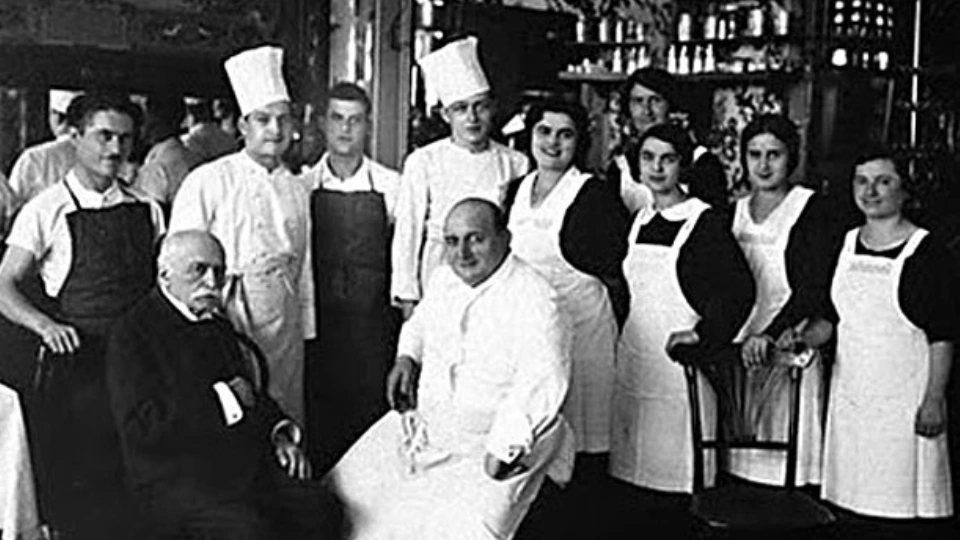
auguste escoffier and teamAuguste Escoffier and his kitchen crew: this is what culinary apprenticeship in the past looked like. (via Skinny Chef)
Culinary arts (sometimes referred to simply as culinary) encompass everything that is related to cooking, preparing, and presenting food and beverages. Its history can be traced back over two million years ago when cave people began cooking meat over fires to improve its taste and texture. Since then, culinary arts have undergone many developments; eventually leading to the creation of culinary arts studies and schools!

It was during the Renaissance era when Western monarchs began to decline, and the chefs who had previously worked for them switched to cooking for inns or hotels. This was also the moment when the early form of culinary arts education, apprenticeship, began to rise. It allowed people who wished to master the art of culinary to work for one of those chefs and gain cooking skills and knowledge.

These apprentices worked in different areas of the kitchen, learning as many things as they could. As this trend of apprenticeship continued to grow, the first culinary school, the Boston Cooking School, was finally opened in 1879! It quickly rose to popularity as it introduced the first culinary textbook and encouraged the idea of culinary schools as a place to nurture successful culinary careers.

american culinary federation acfAmerican Culinary Federation. (via ACF)

Along with the establishment of more culinary schools, there are also organizations supporting culinary education that have come to prominence. One of them is the American Culinary Federation (ACF), created in 1929 by culinary professionals. The ACF has accomplished many things that fueled the success of culinary schools, such as creating universal training standards for chefs in 1931 and launching the National Standards of Culinary Apprentice programs in the 1970s!

Today, culinary education not only concentrates on preparing students to become chefs. Many culinary schools now provide various subfields of study in culinary arts, with some popular examples including pastry arts, wine steward or sommelier, food entrepreneurship, and food nutrition – all offering interesting and favorable career paths in the hospitality industry!

World’s Best Culinary Schools

While culinary arts is a diverse field with a wide range of studies, the same can be said for culinary schools, as there are a lot of them scattered around the globe. Hence, choosing the right culinary school might become a little challenging for some people. If you are planning to apply to a culinary school, you don’t need to worry though; we have prepared a list of some of the best culinary schools for you to consider!

1. Auguste Escoffier School of Culinary Arts

auguste escoffier culinary arts schoolAuguste Escoffier School of Culinary Arts. (via Auguste Escoffier School of Culinary Arts)

Ranked as the first culinary school in the world, this school is the largest in the United States! The Auguste Escoffier School of Culinary Arts took its name and philosophy from Auguste Escoffier, a French chef known for his legacy in the history of culinary arts. Students of this school can choose either a diploma or degree program with various fields of study, such as pastry and nutrition. The best part is that Escoffier supports financial aid for most of its students!

2. The Culinary Arts Academy

the culinary arts academy switzerland swiss education groupThe aerial view of the Culinary Arts Academy. (via JK Education)

As another member of the Swiss Education Group (SEG), this school is the number one culinary school in Switzerland with over 250 students enrolled per term and instructors who have worked in five-star hotels and Michelin-starred restaurants around the globe. The Culinary Arts Academy has two campuses in Switzerland; one resided in Le Bouveret and another in Brig. Both offer a range of diploma, bachelor, and even master programs!

3. Le Cordon Bleu

le cordon bleu best culinary schoolLe Cordon Bleu. (via Smapse Education)

This culinary school was founded in 1895 in Paris! Today, this establishment is considered as the largest network of culinary and hospitality schools worldwide with over 20,000 students across its 35 institutes. Le Cordon Bleu provides certificate, diploma, bachelor, and master programs for its students to pursue, as well as a teaching methodology that lets students gain experience through hands-on learning.

4. Institute of Culinary Education

institute of culinary education ice usa americaInstitute of Culinary Education. (via ICE)

The next in line is the Institute of Culinary Education (ICE) which was established in 1975! Currently, this culinary school has two campuses, each located in New York and Los Angeles. ICE offers various diploma programs for its students, with chefs from top restaurants and food business leaders as its lecturer! Moreover, ICE also encourages its students to pursue internship and management training for their bright culinary careers!

5. Culinary Institute of America

culinary institute of america usaCulinary Institute of America. (via New York by Rail)

With 4 of its campuses located in New York, California, Texas, and Singapore, the Culinary Institute of America (CIA) is one of the best culinary schools to start or advance one’s food and beverage career. CIA has been providing culinary studies for over 75 years and successfully birthed world-class chefs, bakers, food entrepreneurs, and more hospitality leaders. Just like the previous schools, CIA offers a variety of culinary arts programs for students to choose from!

Culinary Arts Career Prospects

Job opportunities culinary arts jobsCulinary arts career prospects.

Remember, culinary arts is not only about cooking! The diversity of this field offers culinary arts graduates a range of exciting and promising job opportunities. See below for the list of careers you can pursue with a culinary arts degree!

Research Chef

A research chef combines the art and science of cooking to come up with new food and beverage products or even new cooking methods!

Pastry Chef

As a subspecialty of culinary arts, this role is focused on creating everything that is a sweet treat, such as cakes, pies, and other desserts!

Beverage Professional

You can also pursue careers in beverage professions such as sommelier, brewer, or barista, which allow you to craft your own beverages!

Nutritionist

Aside from cooking-related culinary jobs, you can become a nutritionist and manage your own nutrition clinic to provide dietary advice or promote healthy lifestyles to people!

Food and Beverage Instructor

If you have a passion for teaching, this one is for you. With this role, you can work at culinary schools, train new hires at restaurants, or even open your own cooking class!

Food Photographer

Loving both food and arts? Try a job as a food photographer, where you can stage and photograph food for magazines, websites, television shows, and other forms of media.

Food and Beverage Writer

Do you have a knack for writing? Then, this job will suit you. Showcase your skills by writing recipe books or creating a food blog to sell culinary courses!

Wrapping Up

The historical background of culinary arts education lays a strong foundation for modern culinary schools to continue growing and innovating. Today, modern culinary education no longer limits culinary arts to just preparing and cooking food. As a result, culinary schools worldwide provide various subfields of study for their students to pursue – each with challenging yet promising career opportunities.

The high standard of education and training in culinary schools leads the graduates to achieve success in numerous industries, particularly the hospitality industry, where food and beverage, including culinary arts, play a central role. Aside from acquiring knowledge in culinary schools, many culinary arts students also hone their skills through culinary internships or management training. The best part is that you can get both in RMC Asia!

RMC Asia is a professional team that specializes in providing hospitality internship and management training programs for young talents worldwide. We partner with prestigious hotels and resorts across Asia to support our participants with hands-on working experience combined with unique cultural exchanges in our program destinations!

It’s time to cook up your outstanding culinary arts career with us! Find your dream culinary internship and join our successful participants here.

Recommended: Hotel Management: Dynamic Studies with Promising Career Trajectories

Cooking Up Success with Culinary Arts Education! Read More »

Scroll to Top

This website uses cookies to ensure you get the best experience on our website. Learn more about our privacy policy.