
Hospitality Industry

Bleisure Travel: A Modern Way for Worker’s Getaway

Bleisure Travel: A Modern Way for Worker’s Getaway

A thing about traditional business travel is that it was not seen as an entertaining trip previously. As the recent pandemic disrupted all forms of lifestyle, people’s opinions on business trips have taken a U-turn. While there are traditionally thoughts given to leisure activities during business trips, a certain trend has begun to gain attraction by workers worldwide: bleisure travel.

The influence of pandemic working systems (remote and hybrid), the increase in awareness of workers’ mental health, and the strict aspects of old-fashioned business trips result in bleisure travel innovation, which combines business purposes and leisure activities!

As bleisure travel becomes more common among workers and companies, some of us might be wondering about the trend and curious about what it’s like to experience one. Today’s edition of our article will familiarize you with the travel trend: starting from the complete explanation to pro tips on planning your bleisure travel, we’ve got them all covered!

About Bleisure Travel Trend

arrival airport vacation bleisure travel trendA man arrived at his bleisure travel destination.

Business trips are usually two to three days corporate conferences that are often boring and do not offer anything remotely close to leisure activities. However, this was before millions of workers switched to remote and hybrid working systems during the pandemic – since then, a new travel trend that combines business and leisure was born and changed how people travel post-pandemic.

The trend, which is abbreviated as “bleisure”, gains the attention of workers ranging from freelancers to corporate executives who are looking to blend their business trips with vacations, as it allows them to immerse themselves in brand-new atmospheres and explore tourist destinations since the most views workers get to see during the traditional business trip are hotel areas and not much else.

man enjoy vacationA worker enjoying his bleisure trip.

So, what does a bleisure travel look like? According to Expedia via Adecco Group, it is a business trip extended for leisure purposes, which includes entertainment activities and how easy it would be to get around the destination.

As for the trip duration, it usually depends on where the worker is traveling from because they may have spent more time on the journey than at the destination. Nevertheless, statistics from Stratos show that a majority of 39% bleisure trips last for two nights, followed by three nights length in around 31%, four nights length in 17%, and only 12% stay for a night.

Motivated by business as its main purpose, the flexibility it offers for travelers to work from different locations, as well as the post-pandemic work systems has pushed bleisure travel to popularity among workers. These aren’t the only driving factors, as there are more reasons why the trend attracts employees, which we have covered in the next section!

Why Bleisure Travel is a Trend?

bleisure travel trendIllustration of stuff to bring during bleisure travel.

It’s no wonder why bleisure travel is becoming a trend and a tertiary need for workers. For starters, here are some of the main reasons why it is popular:

  • Bleisure travelers can get a lower rate for a longer stay, as companies often cover the major part of business trip expenses.
  • Most bleisure travels allow workers to bring along their family or friends, which is looser than the old-fashioned business trip.
  • Bleisure travel is linked to employee satisfaction; it helps workers to refresh before returning to the office.

Other factors that influence the trend’s popularity are numerous surveys on bleisure travel for workers, a few of which are reported in the statistics below:

  • Around 82% of bleisure travelers tend to stay at the same hotel during the whole trip. This allows companies to access favorable rates for extended stays while sharing the spending, thus helping to reduce the cost of accommodation.
  • Since the pandemic, 33% of workers are more concerned with their physical and mental well-being. This increased their appreciation for bleisure travel for mental health benefits.
  • Bleisure travel is seen by 86% of employees as a key to career development and crucial to maintaining business relationships.

Regardless of its popularity, there is still a long way to go for bleisure travel to improve and innovate. On the other hand, the trend is surely a worthy option for those who value this type of travel!

Bleisure Travel 101: Tips to Begin Your Trip

The perks of bleisure trips lure various types of workers to have one for themselves. If this is your first time knowing bleisure travel and planning to try it, take note of the following tips to make the most of your bleisure travel experience!

1. Do Pre-Travel Research

research before travelDo a research before you go on your trip.

Wherever you plan to travel, it’s important to do some research before taking off to the destined place. Whether to schedule your free time during the trip or list down tourist spots you would like to visit after work, these preparations will help you to make the most of your business trip and keep your leisure priorities in check!

2. Pack Your Bags

pack bags pack belongings for vacationPack your belongings in efficient ways.

What would your bleisure travel be without bringing your belongings? As you pack all the essential stuff for your trip, make sure to free some space in your luggage for a possible little shopping later. A pro tip: bring clothes that can pass as business and casual attire to make more room for other things in your luggage!

3. Manage Your Time
time managementManage your schedule for a seamless bleisure trip.

Schedule your leisure outings in a way that will work in tandem with your business activities! Whether you prefer to reduce stress with fun before answering business responsibilities or unwind after work is done for a worry-free holiday, managing your leisure time allows you to maintain your job performance and get the most out of your bleisure travel.

4. Use Good Company

fun vacation with friends during bleisure tripHang out with your friends during bleisure travel.

Are you going on a solo bleisure trip instead? Make it merrier by hanging out with friends in the destination you’re visiting once work is done. Another option worth trying is to hire tour guides to explore local attractions or ask your hotel concierges for travel spot recommendations. Whatever your preference is, it doesn’t hurt to use a good company to spice up your trip.

5. Get Additional Days

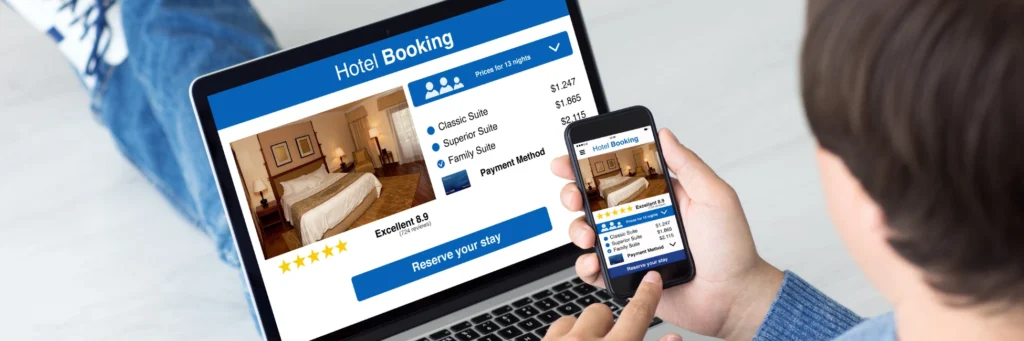
hotel booking for bleisure or business and leisure tripBook extra days to your bleisure trip.

Want to explore more of your bleisure travel destination? Add extra days to your trip! Depending on the date of your trip, Friday through Sunday are recommended days to add before or after your stay. While you are at it, make sure to enjoy the finer things with your pocket money, as most business trip expenses are covered by the company – which saves you more than a regular vacation would!

Wrapping Up

Bleisure travel changes people’s view of boring business trips! The range of perks it offers to both workers and companies, along with external factors like the shift of employees’ preferences to remote and hybrid working have pushed the trend into the spotlight and attracted much attention.

Seeing its popularity, more workers and companies are normalizing the trend, and the hospitality industry is taking advantage of this opportunity with hotels competing to provide distinguished services and facilities for bleisure travelers. However, bleisure travel is not exclusive to freelancers, office workers, or corporate executives; you too can have your own bleisure trip with RMC Asia!

We are specialists in cultural exchange programs that connect you with our affiliated host organizations through hospitality internships and management training in Asia’s famous destinations.

Our programs provide you with everything you need to be a valuable asset to the hospitality industry: hands-on work training with seasoned experts, access to the international job market, and cultural exchange experiences in numerous placement locations across Asia which go beyond an ordinary bleisure trip!

Seize this opportunity now; unlock your potential and embark on a successful hospitality career with us!

Recommended: Saving the Earth with Sustainable Hotel Trend

Bleisure Travel: A Modern Way for Worker’s Getaway Read More »

saving the earth with sustainable hotel trend

Saving the Earth with Sustainable Hotel Trend

Our home – the Earth has stood the test of time for billions of years and sustains all forms of life known to mankind! Its significance lies in its abundance of resources, breathtaking natural wonders, and its capacity to provide us with the essentials for survival, such as clean air, water, and food. However, climate change, whether resulting from natural processes or human activities, poses a grave threat to the delicate balance of our planet.

One of the main sources of climate change is mostly carbon or greenhouse gas emissions caused by human activities. Industries, as a human activity that contributes to the issue, are responsible for a quarter of global carbon emissions in 2021 alone, with the hospitality industry being a part of it.

Hence, hotels are often encouraged to be more aware of their environmental impact, which has in return led to the advent of a sustainable hotel trend. The trend promotes eco-friendly services as an effort to reduce hotels’ environmental impact and make the Earth better, which we will cover in detail in this article!

What Sustainability Trend Means to Hotels

what sustainability means to hotelsIllustration of sustainability in hotels.
Last year, hotels are reported to account for about 1% of the world’s carbon emissions! Although this may not sound a lot, its cumulative effects haven’t gone unnoticed by local governments, customers, and hotels themselves. Therefore, more and more hotels are striving to be environmentally aware, which has resulted in the sustainable hotel trend.

The trend, which is defined as “the sustainable practices in hotel operations in compliance with environmental principles”, has steadily gained attention for some time now. Since some of the leading hotels worldwide have adopted this trend into their operations, more hotel owners are joining to follow the sustainable path, as it proves to reduce hotels’ environmental impact and benefits their operational performance in the long run.

Here are some benefits of implementing sustainability for hotels:

  • Maintaining asset value;
  • Attracting green investment;
  • Meeting the demands of customers;
  • Improving hotels’ financial performance;
  • Increasing work environment quality for staff;
  • Enhancing brand reputation and relationship management.

These benefits brought by sustainability implementation not only help hotels to become more eco-friendly, as it also make hotels stand out from their competitors!

For sustainability to be effectively integrated into hotel operations, there are various best practices that hotels can try. By any chance, we already prepared the list and covered them for you in the next line!

Sustainability Best Practices for Hotels

In efforts to reduce their carbon emissions, many hotels have practiced sustainability to lessen their impact on the environment! For instance, renowned hotel chains IHG and Marriott Bonvoy take the initiative by removing single-use toiletries from their hotels’ amenities, which respectively saves them $200 million and $14 million worth of small bottles per year.

Following in their footsteps, there are more ways hotels can use to transform into eco-friendly lodgings and raise common awareness towards sustainability at the same time. Stay tuned because we have summarized them into the list of sustainability best practices for hotels below!

1. Implement Automation

Implement AutomationIllustration of automation in hotels.

Automation not only gives a technological touch to hotel operations; it is also the key to improving hotels’ sustainability! By implementing automation, hotels can conserve energy through a one-switch system that prevents leaving lights on, or energy-efficient LED light bulbs installment.

The automation of check-in and check-out will also help in reducing plastic cards and paper usage, as the entire process is done digitally! Moreover, automation lead hotels to minimize their carbon footprint, as any paper-based documentation is replaced with technology.

2. Preserve Water

Preserve WaterPreserve water as a sustainability practice for hotels.

Controlling guests to preserve water is difficult, but hotels can try educating them to be mindful of water consumption by placing reminder signs in guest bathrooms or encouraging them to take shorter showers.

Hotels can also take the initiative by utilizing technologies, such as Comfort Saver which save water usage by up to 50% and reduce the annual water bill to 25%, or Hydrao Shower Head which is able to track the amount of water usage!

3. Reduce Food Waste

Reduce Food WasteFood waste from a hotel.

Food waste is one of the contributors to carbon or greenhouse gas emissions, specifically waste from meat consumption! Since meat is common in hotel restaurants, hotels can consider providing more vegan dishes to guests instead of meat meals, as they reduce carbon emissions by 64% compared to meat-based foods.

Events and banquets taking place in hotels are other contributors to hotel food waste. In order to decrease the amount, hotels can devise long-term strategies by keeping track of how much food waste is produced on a weekly or monthly basis.

4. Compost Food Waste

Compost Food WasteCompost created from food waste.

Since 8% of greenhouse gas emissions that caused climate change come from food waste, hotels as one of the contributors can mitigate the environmental issue by composting food waste. Banana peels, vegetable scraps, and even tea bags are some of the ingredients for compost, which later can be utilized to enrich the soil in hotel gardens.

Composting is easy; what hotels need first is preparing an ideal spot for composting. Then, composting begins by mixing green (food scraps, garden waste) and brown (dry leaves, newspaper) layers before covering the compost and keeping it moist. For the compost breakdown to accelerate, try to use sugar water, ammonia, or beer!

5. Involve Guests in Sustainability Efforts

Involve Guests in Sustainability EffortsA picture of planting tree together.

Involving guests in hotels’ sustainability efforts will help to raise their awareness toward sustainability, as they are the main consumers of hotels’ water and energy resources. Hotels can try to set up waste separation facilities and encourage guests to separate waste, as well as promote other eco-friendly behaviors.

There is also another way that hotels can do in inspiring guests to become more eco-conscious. Using the upselling technique, hotels can present a selection of “go green” deals that give a sustainable brand image to the hotel!

Sustainable Hotels for Eco-Friendly Travels

The trend of sustainability not only encourages hotels to change their services into more environment-friendly, but it also enlightens creative minds to build sustainable hotels. Up next, we have featured the profile of five sustainable hotels worldwide which might suit your eco-friendly travel preference!

1. COMO Laucala Island in Fiji

COMO Laucala Island in FijiCOMO Laucala Island. (via The Hotel Journal)

COMO Laucala Island consists of 25 villas and 240 acres of farmland that extend over 12 square kilometers! Located in Fiji, the hotel grows its own vegetables and fruits, as well as raises its own livestock.

Committed to its purpose of sustainability, this hotel was built from natural materials. The commitment continues into its spa service, where the hotel uses homegrown herbs, spices, and flowers to create its own signature scents!

2. Bambu Indah in Indonesia

Bambu Indah in IndonesiaBambu Indah. (via The Hotel Journal)

A perfect blend of luxury and nature, Bambu Indah is a recommended hotel to stay in for any eco-traveler visiting Bali, Indonesia! Made by designers John and Cynthia Hardy, the hotel is said to be a true natural wonderland.

Guests staying will enjoy waking up to the sound of spring waterfalls before strolling through the tropical jungle, lazing in hanging hammocks over a river, or engaging in fun and unique activities such as washing local buffalo!

3. The Brando in French Polynesia

The Brando in French PolynesiaThe Brando. (via The Hotel Journal)

Located inside the private island of Tetiaroa, French Polynesia, The Brando promotes the concept of “carefree luxury in the heart of nature”. It has 35 villas ready to welcome guests, with access to explore wildlife including exotic birds and sea turtles that frequent the beaches.

The hotel was built from recycled materials and designed to fit the landscape perfectly. It uses a deep seawater air-conditioning system which reduces energy consumption, making the property more carbon-neutral and self-sustainable!

4. Pench Tree Lodge in India

Pench Tree Lodge in IndiaPench Tree Lodge. (via The Hotel Journal)

A sustainable hotel that offers unique glamping adventures, Pench Tree Lodge will be a fitting choice for travelers who are enthusiastic about wildlife! Located 20 minutes away from Pench National Park in Madhya Pradesh, the hotel consists of 12 treehouses and cottage resorts.

Those buildings are constructed from natural materials, including sal wood. Guests of this hotel will experience a unique stay amidst 40 acres of forest while swimming in the pool and learning more about the flora and fauna around!

5. Song Saa Private Island in Cambodia

Song Saa Private Island in CambodiaSong Saa Private Island. (via The Hotel Journal)

Built with natural materials from Cambodia itself, Song Saa Private Island is a luxurious eco lodging that is home to upcycled decor and repurposed furniture, such as floorboards made from fishing boats or oil drum-based lamps!

Designed by Melita Koulmandas Hunter, the hotel has a sewage system that 100% recycles waste. What’s more, Song Saa Private Island collaborates with local fishermen to practice sustainable fishing, as well as grow its own vegetables on-site!

Wrapping Up

Taking care of our planet is everyone’s responsibility, including the hospitality industry! Hence, more hotels are becoming eco-friendly by adopting the sustainable hotel trend to reduce their negative impact on the environment.

The sustainable hotel trend is undoubtedly worth the praise! Aside from raising hotels’ awareness of environmental issues, it is also fostering a sense of mindfulness in customers toward sustainability’s importance in hotels. As saving the Earth is our responsibility, it’s important for us to take any form of action to make the planet better!

As a part of the hospitality industry, our small contribution is to collaborate with sustainable hotels and resorts across Asia and to educate young talents through our programs. We believe that they are the game-changers who could create a better sustainable hospitality industry.

Take your step to save the Earth and gain an outstanding hospitality career by joining our successful participants now!

Recommended: Decoding the Details of Artificial Intelligence in Hotels

Saving the Earth with Sustainable Hotel Trend Read More »

artificial intelligence in hotels

Decoding the Details of Artificial Intelligence in Hotels

Trends come and go, but this one seems to have secured its position as a popular trend for more years to come: artificial intelligence (AI). While not exactly new, AI utilization in various areas continues to rise for quite some time now, including in the hospitality industry.

AI technology is programmed with the ability to respond to and complete a range of tasks. In hotels, its implementation in day-to-day operations streamlines processes and enables employees to focus thoroughly on hands-on guest service rather than repetitive tasks such as data entry or check-in and check-out.

Knowing the AI trend is one thing, but understanding the AI trend for hotels is another thing. Our article here will be a fun yet insightful way to get to know AI in hotels better; we have you covered from the brief introduction to AI, the impact on hotel operations, to the common AI applications in hotels!

Get to Know Artificial Intelligence in Hotels

artificial intelligence ai hotelsIllustration of artificial intelligence (AI) in hotels.
Hotels have been embracing the artificial intelligence (AI) trend in their establishments for a while now. Seamless digital check-ins and outs, smart room technologies that let guests choose their room preferences, and the list go on. While we may already be familiar with this hospitality trend, what is AI, actually?

As we derive from Hotel Operations, there are several definitions of what AI is:

  • “AI is the capability of a computer system that mimics human-like cognitive functions, such as learning and problem-solving.” -Microsoft
  • “A machine’s capability to imitate intelligent human behavior.” -Webster
  • “An implementation of advanced analysis and logic-based techniques into machines to interpret events, support and automate decisions, and take actions.” -Gartner

The high-tech abilities of AI in responding to tasks and performing actions like a human quickly make AI an essential tool for businesses across various industries, the hospitality industry included. There are five main types of AI, which are as follows:

  • Text AI: has the ability to automate the process of understanding and responding to text-based customer requests.
  • Visual AI: has the ability to automatically identify objects, people, and events in images or videos.
  • Interactive AI: has the ability to naturally interact with customers or employees.
  • Analytic AI: has the ability to make decisions based on data analysis.
  • Functional AI: has the ability to automate tasks and processes.

Since more hotels are going digital in providing services to guests, those types of AI now can easily be found in hotel technologies, such as text and interactive AI in hotel chatbots or functional and analytic AI in hotel mobile apps.

It is more than likely that AI will continue to develop in the coming years, which means the hospitality industry will also continue to evolve along with AI’s growth. As AI has proven its ability to solve hotel deficiencies and is regarded as one of the crucial aspects of a hotel, how does AI actually influence hotel operations? Jump on the next line to discover the impact and advantage of AI in various hotel areas!

Artificial Intelligence Impact on Hotel Operations

It’s obvious that the advantage of artificial intelligence (AI) has brought hotel operations to a higher, more efficient stage! While we know just how capable the innovation is, some of us might still be wondering how exactly it benefits hotels. In this section, we specifically break down the impact of AI on hotel important areas that raise the bar of hotel seamless operations!

1. Revenue Management

revenue managementAI for hotel revenue management.

In terms of hotel revenue management, AI is capable of many things! First, AI is able to optimize room pricing and availability to maximize the hotel’s revenue through predictive modeling that analyzes historical data and predicts future demand and revenue. The room pricing can also be personalized to individual guests based on their preferences, past behavior, and demographics.

Another thing that AI is capable of is assisting hotels in identifying opportunities for upselling and cross-selling to guests based on market conditions and analyzing patterns in revenue data that reveal insights on revenue opportunities and trends for hotels’ benefits!

2. Marketing

hotel marketingHotel marketing metrics with AI.

When it comes to the marketing area, hotel marketers can count on AI to automate repetitive tasks like data analysis, customer segmentation, and campaign management, as well as analyzing data and using predictive analytics to forecast customer behavior and market trends for hotels.

As a result, hotel marketers are able to focus more on strategizing effective marketing and making data-driven decisions! Moreover, AI also has the ability to identify the right marketing channels, audiences, and advertising time to optimize the hotel’s digital advertising campaigns, thus helping to ease the duty of hotel marketers.

3. Sales

hotel salesAI for hotel sales.

After marketing, comes sales! The implementation of AI in the sales area helps the hotel sales team in completing repetitive tasks like data entry, follow-ups, and lead generation. The sales team can also use AI to proactively target potential guests and anticipate changes in demand by utilizing predictive analytics.

Furthermore, AI is able to perform real-time analytics to track group sales performance and identify areas for improvement based on market conditions, guest behavior, and more factors that lead to new revenue opportunities!

4. Guest Experience

hotel guest experienceSatisfied guests leaving the hotel with positive experience.
Guest experience is one of the key areas in hotel operations, and the use of AI has proven to revolutionize the area with more enhanced guest service through AI-integrated chatbots, smart room technologies, digital concierges, and more!

To further improve guest service, hotels can utilize AI to provide immersive experiences like virtual tours and virtual room selection, as well as enhance safety and security that undoubtedly will leave a positive impression on guests.

5. Human Resources

hotel human resourcesAI for hotel human resources.

AI also plays an important role in a hotel’s human resources area. This advancement has changed the area in several ways, starting from the automation of recruitment processes such as resume screening, interview scheduling, and background checking.

That way, the human resources team can save time and focus on developing more effective recruitment strategies and improving employee satisfaction! Last but not least, AI is also capable of adjusting staffing levels accordingly, thus optimizing workforce management that results in more efficient use of hotel human resources.

What AI Applications in Hotels Look Like

The AI trend has led to the development of AI applications in various hotels in recent years and is more likely to continue progressing in its course of implementation. Since this technological advancement proves to greatly improve overall hotel operations, we will cover some examples of common AI applications in hotels and what exactly they look like below!

1. Robot Concierges

ai robot conciergeAn AI-integrated robot concierge. (via ApexTech)

AI makes robot concierges a reality for hotels. These robot concierges can do various tasks, such as managing check-in or check-out processes and interacting with guests with speech recognition capabilities. Hilton is one of the hotels that used robot concierges. Theirs is called Connie, a personable robot concierge that revolutionizes the guest experience to a new level!

2. Chatbots

hotel chatbotsIllustration of hotel chatbots.

Chatbots are impressive! This AI-integrated messaging program is trained to perform specific tasks based on the user’s request, such as providing instant answers to the user’s inquiries anytime, resolving complaints, ordering meals, managing reservations, and more—which is a brilliant way to reach potential guests and build better customer relationships!

3. Seamless Booking Processes

seamless online hotel bookingSeamless booking processes.

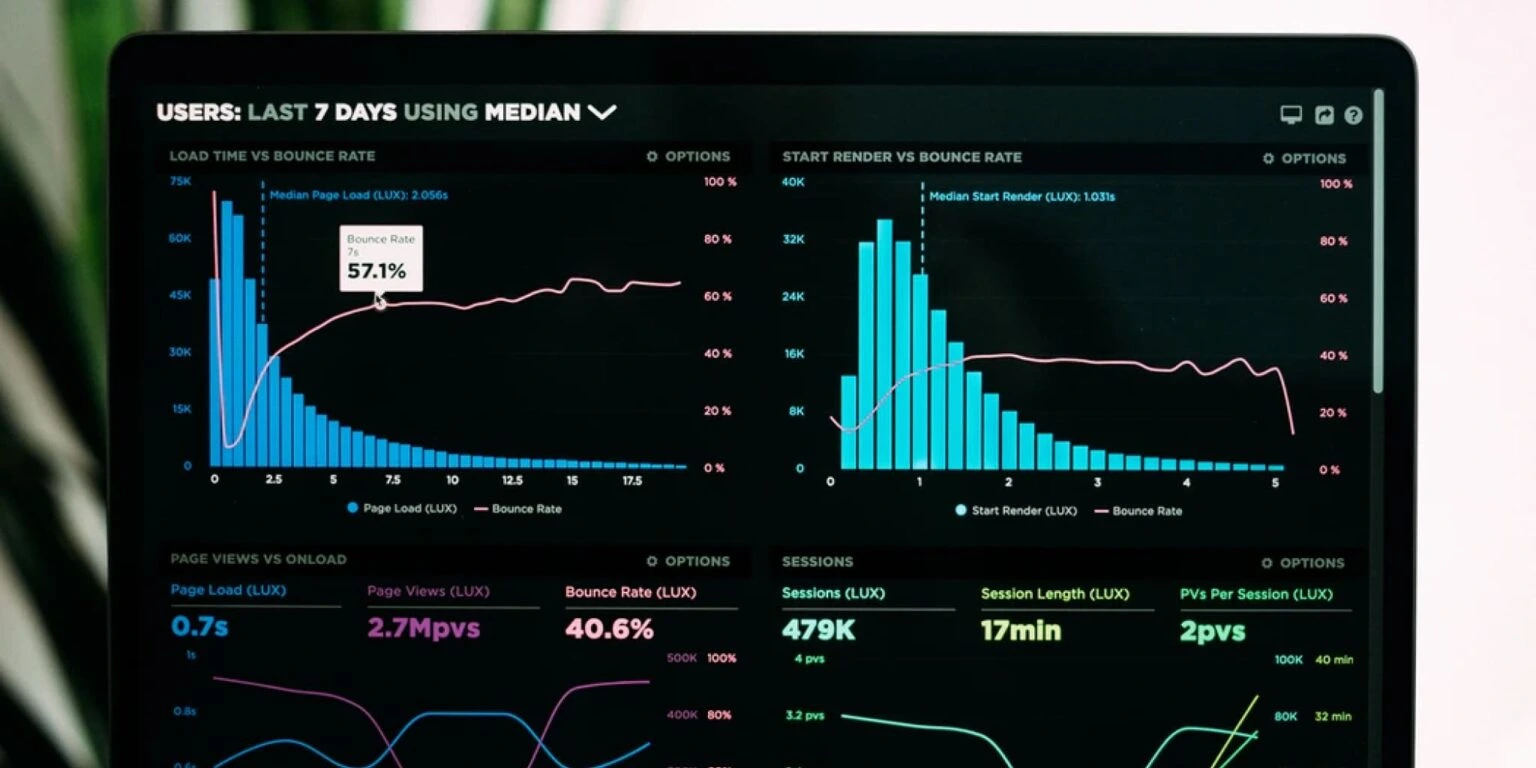
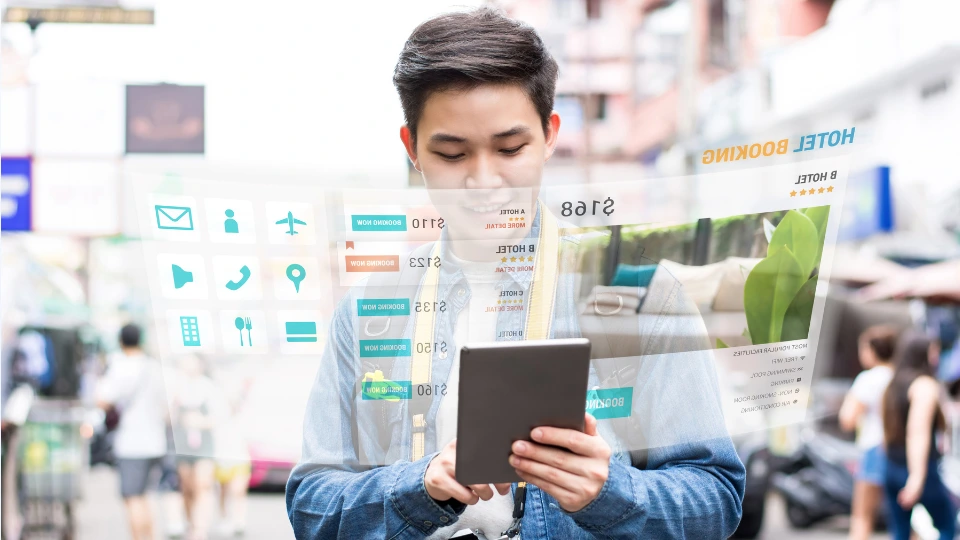
By implementing AI on the hotel’s booking website, potential guests can get booking experiences tailored to their preferences! It works with AI algorithms that cross-check the users’ preferences, then tune the results based on their information, making the booking process seamless!

4. Automation

artificial intelligence ai automationAutomation with AI.

Another common AI application in hotels nowadays is automation. It helps hotels complete repetitive operations like check-ins and check-outs, room assignments, and even housekeeping deliveries. As such, some of the hotel staff’s workload is lifted, so they can focus more on improving guests’ satisfaction levels!

5. Hyperdynamic Pricing

hyperdynamic pricingHyperdynamic pricing. (via ApexTech)

Hyperdynamic pricing uses predictive analytics that allows hotels to search users’ booking patterns, past user data, market prices, and even weather to automatically adjust the room rates to the fluctuations in demand. This application of AI is usually implemented in the hotel’s booking engine, and is one of the efficient ways to maximize the hotel’s earning potential!

Wrapping Up

What an amazing technology AI is, right? It’s inspiring how humans managed to come up with the invention and implement it in hotel daily operations, which results in more seamless and efficient activities that not only benefit hotels but also guests.

As AI in the hospitality industry keeps on developing into more innovations throughout, it’s important for hotels, hoteliers, hotel customers, and those who wish to enter the hotel field to stay on track with this trend!

We at RMC Asia understand just how fast the hospitality industry trends are moving, and we do not want you to be left out. Our team aims to keep up with the industry’s dynamic environment through our hospitality internship and management training programs, which are efficient ways for you to be on course with the hospitality industry.

The wide range of our prestigious host organization partners and enticing program destinations across Asia will give you access to career advancement, the international job market, and unique cultural exchange options in each destination!

Don’t wait; join our successful participants and start your outstanding hospitality career here!

Recommended: Hotel Tech 101: Unlocking the Secret of Mobile Apps

Decoding the Details of Artificial Intelligence in Hotels Read More »

Hotel Tech 101: Unlocking the Secret of Mobile Apps

Hotel Tech 101: Unlocking the Secret of Mobile Apps

Convenience has always been a key factor in the hospitality industry. Hotels have been practicing methods of proper guest services and adequate amenities for a long time to make sure guests have convenient stays, however, the implementation of mobile apps has taken the meaning of convenience to a whole another level in hotels.

This game-changing technology is widely used nowadays and has become a necessity in people’s daily lives. The new trend has certainly encouraged industries, including hospitality, to adapt to new changes by integrating their services with mobile apps.

The mobile app promises guests a higher level of convenience and efficiency that was previously unimaginable in their hands, as it seamlessly helps them in countless ways ranging from booking rooms to creating travel plans in a digitalized manner. Such an amenity not only gives guests an extra advantage but does it also benefit hotels immensely.

As you may have already noticed, this time, we will explore the ways mobile apps bring benefits to hotels; the best practice of its implementation for hotels, and some notable hotel mobile apps that will awe you with their innovations!

How Mobile Apps Benefit Hotels

mobile app benefits for hotelA hotel mobile apps user.

Mobile apps are not merely a tech trend anymore; they have become a mandatory aspect for hotels in the hospitality industry. They are a new way for hotels to serve guests in this modern era, which are designed with abilities to complete various tasks ranging from online booking to contactless, digital check-in.

Its convenience, efficiency, and flexibility enable customers to experience the hotel’s services to the fullest without having to wait in hassle. However, how exactly do mobile apps benefit hotels? According to AppUnite, here are some benefits of a mobile app for hotels:

  • A mobile app can simplify and optimize the booking and check-in process. It also stores guests’ data and proposes services based on the user’s preferences.
  • By tracking more detailed data, a mobile app can help the operational team continuously improve the app and create a better hotel experience for guests.
  • A mobile app can break the language barrier between hotel staff and guests. It is common for hotels to receive guests from all around the globe, and with a mobile app that supports various languages, it is possible to avoid miscommunication and helps the staff deliver guest service better.
  • Using a mobile app, a hotel can increase its sales rate by having guests book extra services like spa treatments or fine dining through the mobile app. The process is a lot easier, which will make guests feel convenient.
  • A mobile app is the perfect tool for hotels to turn their guests into regulars. By integrating a loyalty program into the mobile app, hotels give guests the possibility to collect points and earn rewards, thus encouraging them to be regulars instead of one-time guests.

Such advantages will surely take hotel operations to new heights, but what will a high-tech innovation be without proper utilization? The answer is covered below. We have included best practices for hotels to maximize their mobile app and increase the engagement rate, which would make the guest feel more connected to the hotel!

Mobile App Best Practices for Hotels

mobile app hotel best practiceHotel mobile apps best practices.

Research by CHART shows that mobile apps increase hotels’ on-site revenue by more than 117%. This is because mobile apps are the primary interaction point for guests, and a user-friendly mobile app will help increase the engagement rate.

As stated by Marilyn Brown, there are many ways to raise the hotel’s engagement rate through a mobile app. According to Marilyn, here are three best practices to utilize mobile apps for hotels:

  • Create a personalized experience for guests through in-app push notifications.
  • Implement gamification technique by awarding points to users for specific actions taken on the app.
  • Connect the hotel’s mobile app to other digital channels such as social media or email, and rewards users for connecting their app with these different marketing channels.

Hospitality is a fast-paced and dynamic industry. Now, the majority of its customers are using mobile apps to book hotels and other hospitality services. Hence, it is important for hotels to optimize their mobile apps and build a more engaging experience for guests by implementing these best practices!

Notable Mobile Apps from Luxury Hotels

The popularity of mobile apps encourages hotels to keep up with the trend. It results in various hotel brands, mainly the luxurious ones, launching their own mobile apps for guests. These mobile apps are created to meet guests’ modern needs in this technological era, complete with their exclusive, tech-savvy features! Scroll down to see our compilation of notable mobile apps from luxury hotels.

1. World of Hyatt by Hyatt Hotels & Resorts

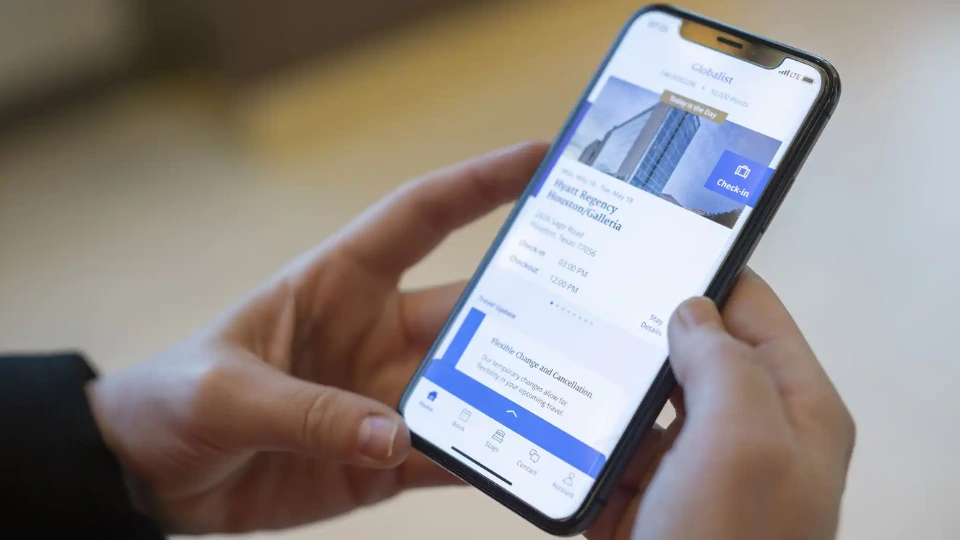
world of hyatt hotels mobile appWorld of Hyatt mobile app interface. (via World of Hyatt)

The World of Hyatt mobile app promises to keep its users’ stays organized, wherever Hyatt’s hotels or resorts they travel to. Users can search for special offers and create travel plans easily through the app, which claims to have increased flexibility and digital amenities that let users stay connected with Hyatt.

The amenities include personalized check-in that lets users confirm their room preferences and select the preferred check-in time, even choosing their housekeeping preferences! The in-app digital key also gives flexibility by granting guests instant access to the guest room, fitness center, and pool.

2. Marriott Bonvoy by Marriott International

marriott bonvoy rewards mobile appMarriott Bonvoy mobile app interface. (via Marriott International News)

More than 8,000 hotels under Marriott International are available for booking through its mobile app, Marriott Bonvoy. Not only online booking, but users can also check in up to two days before their stay, and the Marriott Bonvoy app will notify their room status quickly!

Similar to Hyatt’s mobile app, the Marriott Bonvoy app also provides a digital key for guest access to rooms and other hotel facilities. Users can use the Mobile Chat feature whenever they need special services, specific amenities, or other requests, recommendations, and information.

3. Four Seasons by Four Seasons Hotels and Resorts

four seasons hotel mobile appFour Seasons mobile app in tablet and phone. (via Four Seasons)
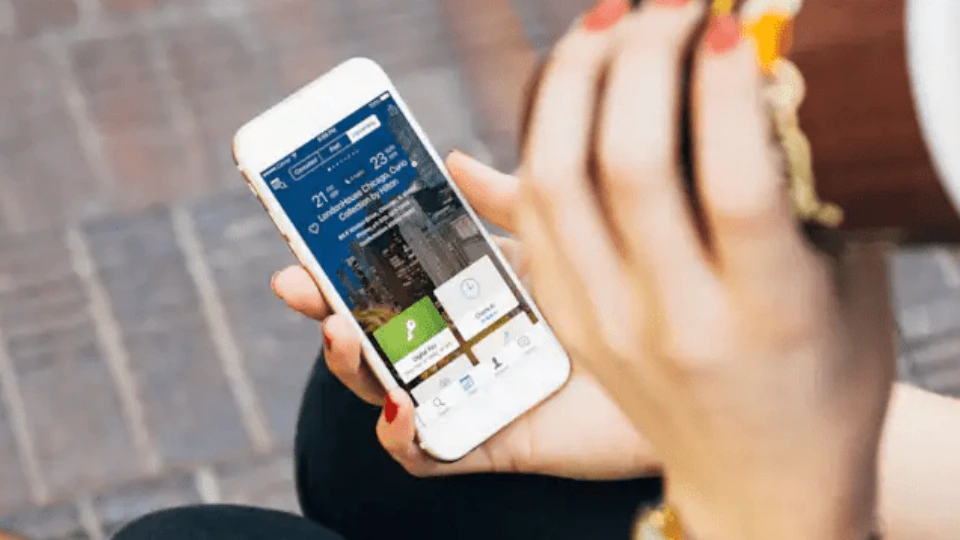
A mobile app that claims to be as mobile as its user and as human and thoughtful as ever, the Four Seasons mobile app allows users to find Four Seasons’ properties around the globe easily. Its digital key feature grants guest access to rooms, gyms, and other hotel facilities during their stays.

The app also gives users a perfectly personalized experience through the always-available concierge chat feature and an accessible, up-to-date daily itinerary that lets users add their restaurant reservations, spa treatments, and other activities to schedule with ease!

4. Hilton Honors by Hilton Hotels & Resorts

hilton honors hotel mobile appHilton Honors mobile app interface. (via Hilton)
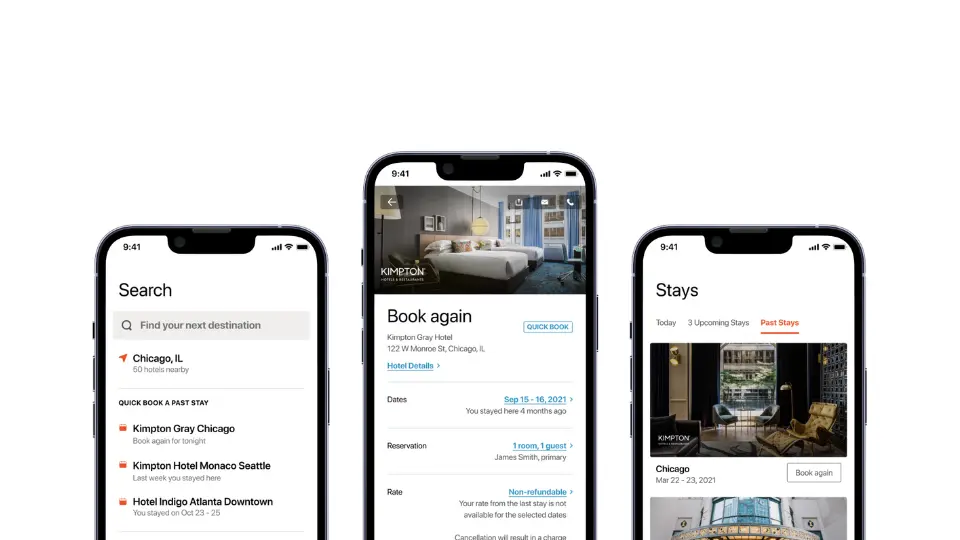
The Hilton Honors app promotes various ways that will enhance guests’ stays! Guests can seamlessly search for their preferred Hilton hotels by distance or price and book a room through the app for the best rates. It also offers a much less hassle check-in process by allowing guests to check in the day before their stay!

Just like its fellow competitors, the Hilton Honors app provides a digital key to access guests’ rooms. The app also has a feature called “Connected Room”, which lets guests control the TV, lighting, and room temperature as they prefer. Moreover, the app allows quick, contactless checkout for guests who are rushing to get going!

5. IHG Hotels & Rewards by IHG Hotels & Resorts

ihg hotels and rewards mobile appIHG Hotels & Rewards app interface. (via IHG Hotels & Resorts)

Designed for the convenience of users, IHG Hotels & Rewards gives the most out of the hospitality mobile app experience all in one place. It allows guests to book their stays quickly and easily in a few simple steps, as well as manage their upcoming travel plans, check in and check out digitally, and view the hotel bills during their stays.

Its Account Dashboard feature enables guests to track their progress towards Milestone Rewards, which include interesting rewards such as points, confirmable suite upgrades, and annual lounge membership. Surely, the app has also occupied with chat-based digital concierge and integrated digital wallets to further enhance guests’ experiences!

Wrapping Up

Technological advancements in the hospitality industry have resulted in a wide range of innovations that claim to take the guest experience to a new level, and the mobile app is among the most popular inventions helping hotels achieve that.

The familiarity of mobile apps in everyday life thus encourages hotels to develop their own mobile apps, each with competing and promising features that maximize guests’ hotel experiences to the fullest.

RMC Asia certainly understands the importance of such hospitality technology; hence, we aim to educate young talents in the hospitality industry through our internship and management training programs across Asia’s prestigious host organizations. Our programs combine practical work experience and unique cultural exchange in various program destinations that provide participants with the skills they needed to become valuable hospitality professionals!

The hospitality industry keeps advancing, and so do you. Take the first step towards your successful hospitality career by joining our internship programs now!


Recommended: Learning the Ins and Outs of Hotel Management Systems

Hotel Tech 101: Unlocking the Secret of Mobile Apps Read More »

hotel property management system

Learning the Ins and Outs of Hotel Management Systems

The bigger an organization is, the more effort is needed to keep it manageable. Hotels are the prime example; they often have large numbers of staff and an overflowing amount of guests each day. But how exactly does a hotel manage its business operations under such conditions?

Hotel management systems were invented to address the issue. This hospitality technology is an innovation that can manage multiple common tasks in hotels by utilizing various technologies, from automation and data analytics to the internet that we take for granted on a daily basis.

Advanced hotel management systems successfully make hotels operate in more effective ways, and using a hotel management system has become essential for any hotel to maintain its presence in this technological era.

Our article today will take you deeper into the ins and outs of hotel management systems. This is our attempt to provide you with insights into hotel management systems in general, the different types of hotel management systems, and eventually the benefits and challenges of implementing one. Now, let us begin our insightful journey, shall we?

What is a Hotel Management System?

hotel management systemsAn Illustration of Hotel Management System.
Before we try to fully understand the hotel management system, let us first get to know hotel management. In the hospitality industry, hotel management means overseeing the hotel’s operations and adapting to meet challenges. Its purpose is to constantly attract guests to visit and make their stays at the establishment, while also providing the best hospitality service at the same time.

Hotel management systems were created to support the entirety of those hotel management processes. These systems consist of various types of management systems with different functions and features, all of which have the ability to cover multiple common hotel tasks, such as storing booking details, which is one of the front office duties.

Since hotel management systems maximize technology usage, they allow hotels’ day-to-day operations to become more effective, thus enabling hotel staff to focus more on specific tasks that can’t be handled by technology alone.

As we have mentioned earlier, hotel management systems are made up of various management systems. Below, we have got you covered with the types of hotel management systems that are commonly used in hotels!

Types of Hotel Management Systems

As an important technology that supports its business, a hotel usually uses more than one hotel management system to assist its daily operations. These systems are equally essential, and surely, their high-tech features allow hotels to keep their activities organized.

In any case, below we have compiled the top 5 hotel management systems that keep hotel operations running, their functions, and even some of the famous hotel management systems software!

1. Property Management System

property management systemAvantio, a Property Management System used by one of Marriott Bonvoy’s properties. (via Avantio)

The Property Management System (or PMS, in short) is software that supports hotels’ operations by providing a centralized computer system to organize various information in a hotel.

The scope of the information includes booking dates, guests’ names, room assignments, and other details stored inside the PMS. Its centralized computer system allows PMS to update and consult centralized records from multiple devices, thus increasing the efficiency of hotels’ operations.

Aside from the hospitality industry, PMS is used by other industries, such as manufacturing, and by local governments, which also utilize this technology. There are various PMS software for hotels, such as Preno, Cloudbeds, Opera, or Avantio, which is used by Hotels & Villas, one of Marriott Bonvoy’s properties.

2. Channel Management System

hostaway channel management cms hotelHostaway, a Channel Management System software. (via Hostaway)
Imagine yourself booking a stay at a hotel, only to find out your reserved room has been given out to another guest who has recently arrived and made no reservation before. That would be total chaos, right? Hence, this is one of the reasons why the Channel Management System (CMS) exists.

Channel management itself is a process that involves managing and updating room rates, distribution, and availability across multiple online booking channels like Expedia or Trivago in order to avoid issues such as double booking or overbooking.

Using the Channel Management System (CMS), hotels can update their allocations simultaneously in different online booking channels, as CMS keeps track of room types, rates, and availability information stored in the hotel’s PMS and syncs it to the hotel’s chosen booking channels in real-time. Just like PMS, there are various forms of CMS software for hotels out there, with some examples including Hostaway and Guesty.

3. Online Booking Engine

siteminder online booking engineSiteMinder, an Online Booking Engine. (via SiteMinder)

Also known as the Internet Booking Engine (IBE), the Online Booking Engine is a reservation processing system that functions to collect guests’ booking data through the hotel’s website and integrates it with other hotel management systems such as PMS.

Since most hotels embedded Online Booking Engines into their websites, the former can also be used as customizable website templates aside from their primary function as a reservation processing system. Some examples of Online Booking Engines software include SiteMinder and Avvio, which are used by many hoteliers and luxury hotels.

By using Online Booking Engines, hotels can receive new reservations from guests without paying commissions to 3rd-party distribution channels like online travel agencies (OTAs). Moreover, Online Booking Engines enable guests to book online anytime and anywhere, as well as pay immediately with an integrated payment gateway!

4. Customer Relationship Management

crm revinateRevinate, a CRM software for hotels. (via Revinate)
You might already be familiar with Customer Relationship Management (CRM) since more businesses across industries are using it to improve their customer services and experiences. By its general definition, CRM is a software system that tracks and automates a business’ communications to nurture its relationships with customers and leads.

CRM in hotels is almost the same; however, it has more specialized features and functions, as hotel CRM also manages loyalty programs, customer feedback, and an overview of customer interactions and preferences through data collection. CRM makes it possible for hotels to understand their guests better, thus improving their services and increasing customer experience and engagement.

Lots of CRM software for hotels generally offer the same services; however, according to the HotelTechReport, some of the highest-rated hotel CRM software this year are Revinate (rated 92% by 63 luxury hotels) and BookingWhizz (rated 98% by 24 branded hotels).

5. Revenue Management System

ideas revenue management hotelIDeaS, a Revenue Management System software. (via IDeaS)

Revenue management is the action of selling the right hotel room to the right guest at the right price by analyzing internal data, market supply, and customer demand to calculate the ideal room rates using the Revenue Management System (RMS).

RMS helps hotels improve their occupancy rates and avoid overbooking, along with supporting related hotel departments to make smarter sales and marketing decisions. Moreover, RMS also eases the staff workload of creating spreadsheets and reports to calculate demand by hand!

Similar to other hotel management systems, RMS also offers a variety of software for hotels. Among the most recommended and highest-rated RMS software is IDeaS, which is rated 92% by 528 hoteliers.

The Importance and Benefits of a Hotel Management System

a satisfied guest and happy staffA satisfied guest and a happy staff.

As a technological innovation for the hospitality industry, implementing a hotel management system is crucial to supporting seamless hotel operations. Right here, we have written down a few reasons why the hotel management system is important and the benefits it brings to the business!

  • It increases bookings and avoids booking errors with its task automation.
  • It saves time on administrative tasks and lets the staff focus more on important duties.
  • It helps build strong customer relationships with guests by improving communication and customer service.
  • It can increase the hotel’s online visibility through the use of proper hotel management system software.
  • It analyzes the customer base to produce data and allows hotels to make the right operational and marketing decisions.

By implementing the hotel management system, a hotel can operate its business more effectively and produce more profits as well. However, it should be noted that where there is a benefit, there is also an obstacle that tags along with it. Hence, our next stop is learning the challenges of hotel management systems implementation!

Hotel Management Systems Challenges

hotel management system challengesIllustration of Hotel Management Systems challenges.

Certain pros always come packaged with cons, and the same goes for hotel management systems. There are some common challenges faced by hotels in implementing this technology such as:

  • Hotel management systems have a higher risk of cyberattack.
  • Cloud-based hotel management systems still rely on an internet connection.
  • Hotel management system implementation results in an additional cost to the hotel’s budget.
  • It takes time to train hotel staff to operate hotel management systems.
  • The wide variety of hotel management systems often makes it difficult for hotels to choose the best option for their business.

Wrapping Up

Thanks to hotel management systems, managing hotel operations has become much easier. They bring benefits that not only improve a hotel’s business but also ease the weight of staff duties.

Hotels can utilize each type of hotel management system to maximize sales, earn greater profits, and compose better business strategies that increase their popularity, credibility, and guest satisfaction. Every one of these hotel management systems has different functions, but they are all integrated for the purpose of successfully managing hotels’ daily operations.

Having knowledge of and mastery over one or more of the hotel management systems is essential to becoming a hospitality professional. There are many ways to master the art of hospitality management systems, two of which are by taking hotel management courses and learning the practice through hands-on hospitality internships.

In RMC Asia, our internship programs provide more than soft and hard skills. We give our participants access to work with hospitality industry experts in prestigious hotels and resorts across Asia, connect with people of diverse backgrounds, as well as gain exposure to a new culture and global workforce. All of these successfully prepare our participants to advance in the hospitality industry and stand out from the crowd!

The hospitality industry is moving fast, and it only takes determination to catch up with it. Make your move by joining the success of our participants now! Find your opportunity and start your hospitality career with us here.

Recommended: A Close-Up Look at Hotels’ IT Department

Learning the Ins and Outs of Hotel Management Systems Read More »

Scroll to Top

This website uses cookies to ensure you get the best experience on our website. Learn more about our privacy policy.